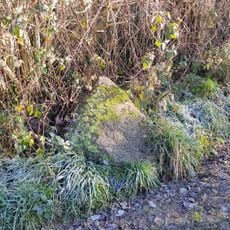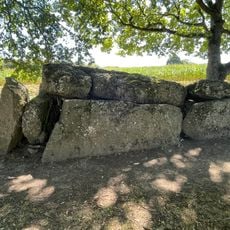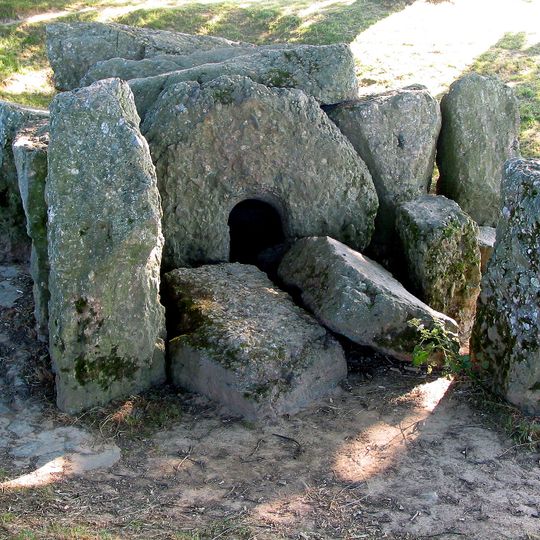
Dolmen of Oppagne, Neolithic dolmen in Durbuy, Belgium
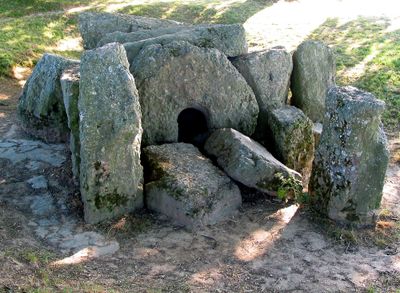
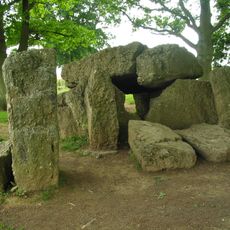
The Dolmen of Oppagne is a Neolithic burial structure made from large stones arranged to form an internal chamber. The construction measures approximately ten meters long and five meters wide, built from stones that fit together without mortar.
This structure was built in the Stone Age, roughly 5000 years ago, and belongs to the traditions of the Seine-Oise-Marne culture. Archaeological work in the 1980s and 1990s uncovered human remains, animal bones, flint artifacts, and pottery pieces from the burial site.
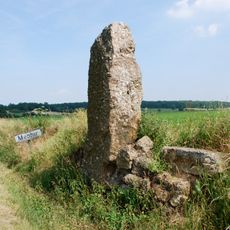
The round-arched hole in the entrance stone is a Seelenloch, a feature of Seine-Oise-Marne tombs through which the living could address the dead. Pottery from the Bell Beaker and Funnel Beaker cultures found inside shows the chamber was reused long after it was built. Four of the five menhirs east of the dolmen were re-erected in spring 1997.
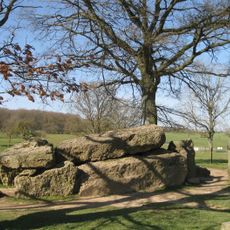
The dolmen lies in open fields about one kilometre south-west of Oppagne, in the municipality of Durbuy, and roughly 1.5 kilometres south-west of Wéris. It sits in a hollow surrounded by four trees among cultivated fields, partly below ground level, so the approach is on foot over field paths.
An eight-meter-long stone pathway discovered outside the dolmen suggests the structure was never originally covered by an earthen mound. This sets it apart from many other megalithic burials in the surrounding area.
The community of curious travelers
AroundUs brings together thousands of curated places, local tips, and hidden gems, enriched daily by 93,689 contributors worldwide.