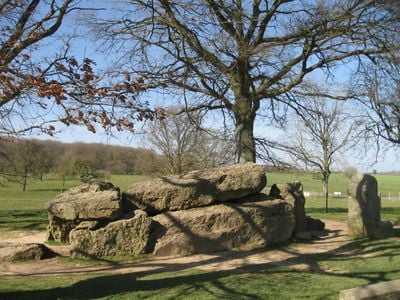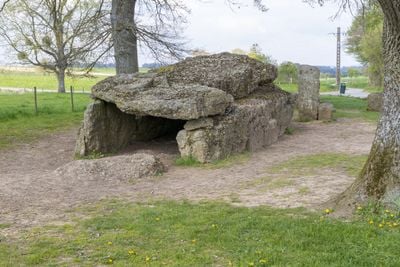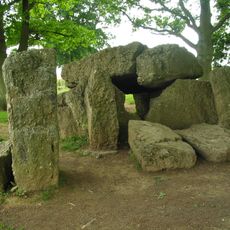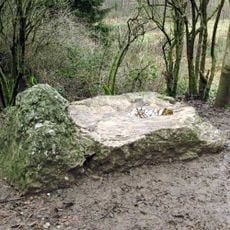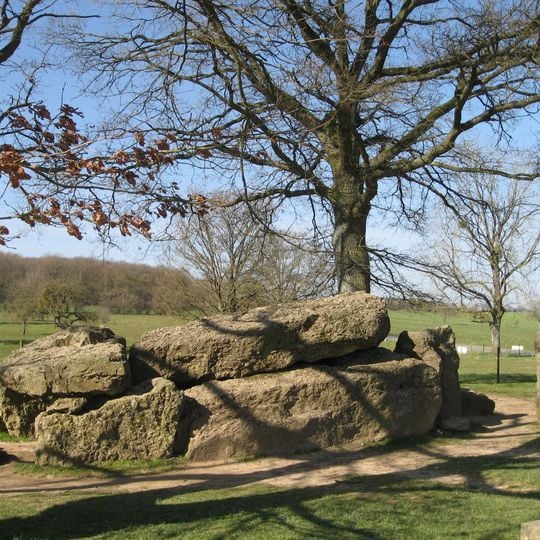
Dolmen of Wéris, Neolithic burial chamber in Wéris, Belgium
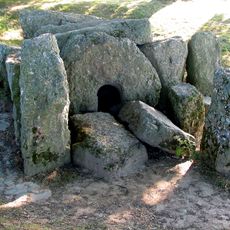
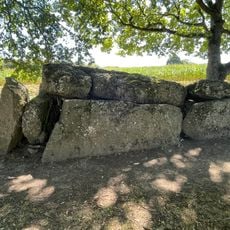
The Dolmen of Wéris is a Neolithic gallery grave of the Seine-Oise-Marne culture, about 10.8 metres long and oriented north-east. A short forecourt leads to a rectangular burial chamber 6 metres by 1.7 metres and 1.5 metres high, roofed by two capstones on four uprights; the larger capstone weighs some 30 tonnes. The entrance faces north-north-east and has a holed stone, a Seelenloch.
The Dolmen of Wéris was built in the late Neolithic, about 5,000 years ago, by people of the Seine-Oise-Marne culture. The Belgian state bought it in 1882 for 1,200 Belgian francs. It was restored in 1885–1886, when a fence was added and Roman coins were found during excavation, and again in 1991, when the fence was removed. A Roman road, still called Chemin des Romains, ran beside it and was uncovered in spring 2000.
This burial place was used for funeral ceremonies that reveal how ancient people honored their dead and said farewell. The objects found inside, such as pottery and tools, show that families placed meaningful items with the deceased.
You can see the monument from the outside, but you are not allowed to enter or climb on it. The nearby village of Wéris has the museum La Maison des Mégalithes, which provides more context about the site's history and importance.
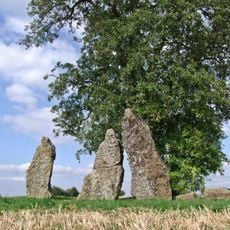
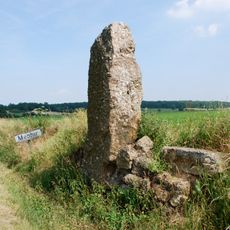
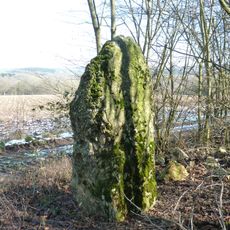
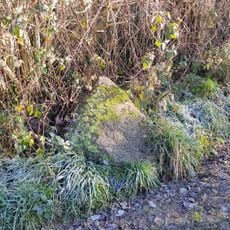
The three menhirs standing in line with the dolmen's portal did not all originate on the spot: local farmers moved most of them out of their fields so the stones would no longer get in the way of ploughing. Only three remain where they were first erected.
The community of curious travelers
AroundUs brings together thousands of curated places, local tips, and hidden gems, enriched daily by 93,458 contributors worldwide.