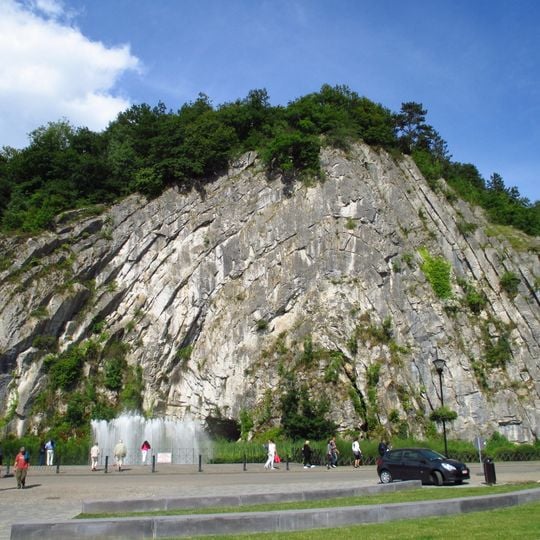
Anticline of Durbuy, Geological formation in Durbuy, Belgium
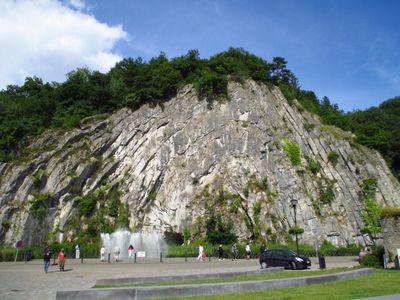
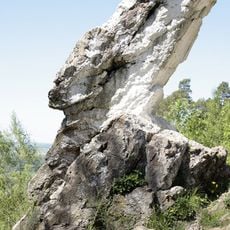
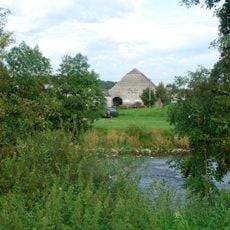
The anticline of Durbuy is a rock formation from the Middle Frasnian period containing marine limestone that forms a curved arch-like structure. The layers are clearly visible from the Ourthe River and display the interior of folded rock beds.
This rock structure was first scientifically documented in 1807, marking an important advancement in understanding the geology of the region. The discovery of the folded structure helped scientists grasp how the Earth's crust moves and deforms.
The anticline serves as an important study location for geology students from the region, who observe rock folding principles directly in nature. School groups and university courses regularly visit the exposures to understand the practical application of geological concepts.
The site is accessible year-round and lies within the UNESCO Global Geopark Famenne-Ardenne, where geological information is available. A visit works best when you are already exploring the area, as the formation is visible directly from the river.
The Ourthe River has exposed the rock layers so clearly that all internal structures are visible, making this location exceptional. This demonstrates how flowing water over long periods shapes the landscape and reveals geological secrets.
The community of curious travelers
AroundUs brings together thousands of curated places, local tips, and hidden gems, enriched daily by 91,335 contributors worldwide.