Église Saint-Gilles, Romanesque parish church in Liège, Belgium
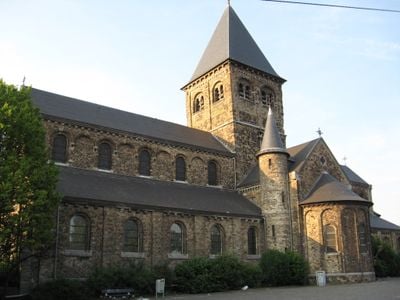
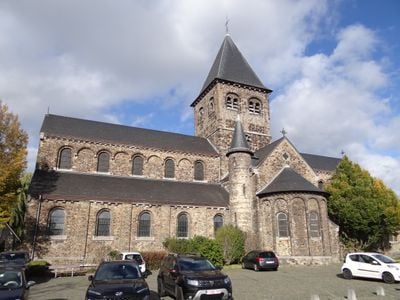
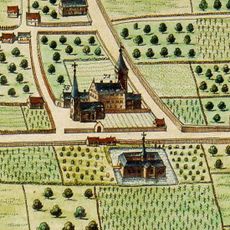
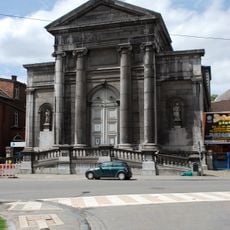
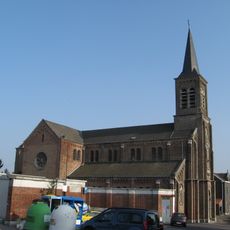
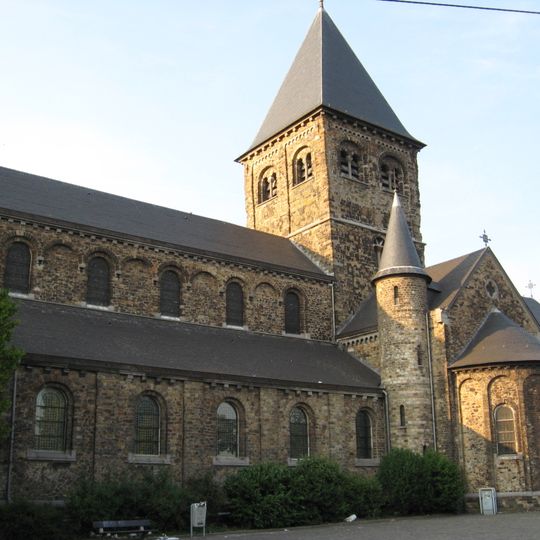
Église Saint-Gilles is a Romanesque parish church featuring a Latin cross plan with a circular apse and side aisles. A tower decorated with pilaster strips and arched friezes crowns the exterior of the building.
Founded in 1124 by Prince-Bishop Alberon I of Louvain as a Romanesque church, it was built with local shale and coal sandstone from the Publémont. Closed in 1786, it reopened for worship in 1803 after four years of repairs. In the 19th century, mining subsidence led curé Hyacinthe Demaret to commission architect Auguste Van Assche to consolidate, restore and enlarge it.
The neighbourhood takes its name from Saint Giles, the church's patron, and the parish still serves the districts of Saint-Gilles, Saint-Nicolas-en-Glain and Sainte-Gertrude, whose chapels have disappeared. Since 30 June 2024 the church holds the tomb of Blessed Eugénie Joubert, a catechist in this parish who died in Liège in 1904 and was called a model for catechists by John Paul II in 1994; a chapel is dedicated to her.
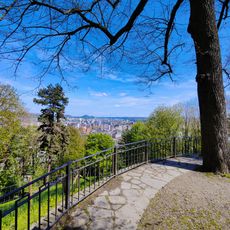
The church stands in the Saint-Gilles district on the Publémont hill, in the centre of present-day Liège. The building is entered from the street side facing the tower and the round turret; the neo-Romanesque extension added by Auguste Van Assche is attached to the older Romanesque walls. Ground movements from former coal mining affected the structure, so parts of the floor and walls are not perfectly level.
Since 30 June 2024 the church has held the tomb of Blessed Eugénie Joubert, a catechist in the parish who died in Liège in 1904 and was called a model for catechists by John Paul II in 1994. A chapel is dedicated to her. The 1646 memorial to Prince-Bishop Alberon I stands in the building, but the sources do not place his tomb under the altar.
The community of curious travelers
AroundUs brings together thousands of curated places, local tips, and hidden gems, enriched daily by 95,648 contributors worldwide.