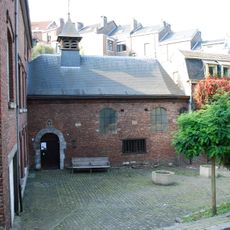
Couvent des Guillemins de Liège, Religious monastery in Liège, Belgium
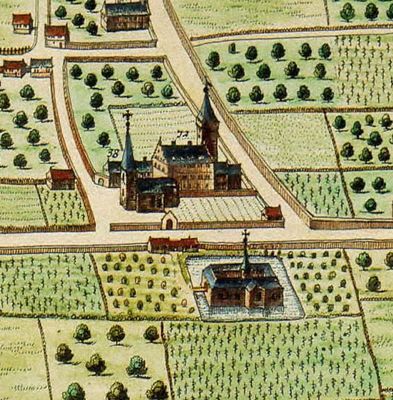
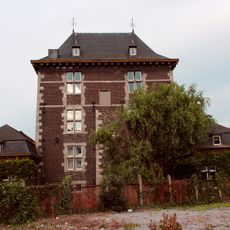
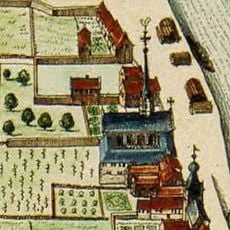
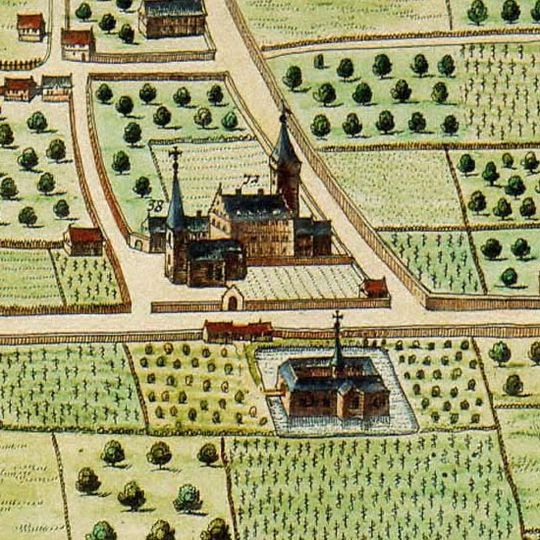
The Guillemins Monastery was a walled monastic complex in Liège, north of Place de Bronckart, centred on a tall stone church with a dark slate roof and a slender spire topped by a cross. A taller square tower with a pointed roof stood behind the church, and reddish-brown buildings clustered at its left and rear. A low perimeter wall enclosed courtyards and garden plots, with a gateway in the front wall.
Griseal de Bierset founded a hospice for eight infirm priests between 1246 and 1280 near Sainte-Véronique. In 1287 Bishop Jean de Flandre installed Guillemin Benedictines from Bernardfagne there, and the house became a priory. Called maison de la Motte from 1328 to 1638, it gained the revenues of Sainte-Véronique in 1365 from Prince-Bishop Jean d'Arckel, whose heart was long kept in a lead vessel at the choir entrance.
The name recalls the Guillemites, a religious community that shaped this area for centuries. The monks left their mark on the neighborhood's organization and daily rhythms over generations.
The site is now accessed through Liège-Guillemins railway station, built on the former monastery grounds. Little of the original structures remains visible today, so visitors should manage expectations about what can be seen.
The monastery stood on a mound formed from earth dug out of the pond that surrounded the seigneurial dwelling. Springs on the hill, notably the Bois-d'Avroy and Bois-l'Évêque streams, kept the moat supplied, and in 1319 the brothers obtained from the Avroy court a record of their right to use these waters.
The community of curious travelers
AroundUs brings together thousands of curated places, local tips, and hidden gems, enriched daily by 95,338 contributors worldwide.