Parc de la Boverie, Urban park in Liège, Belgium
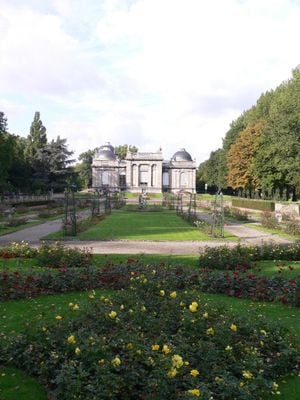
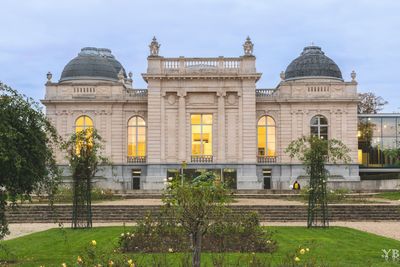
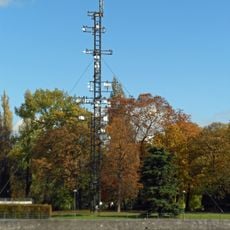
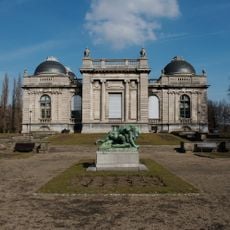
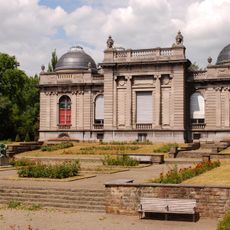
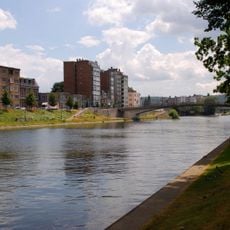
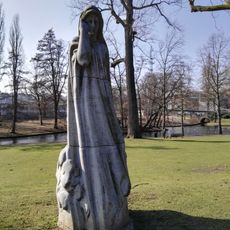
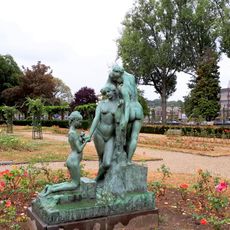
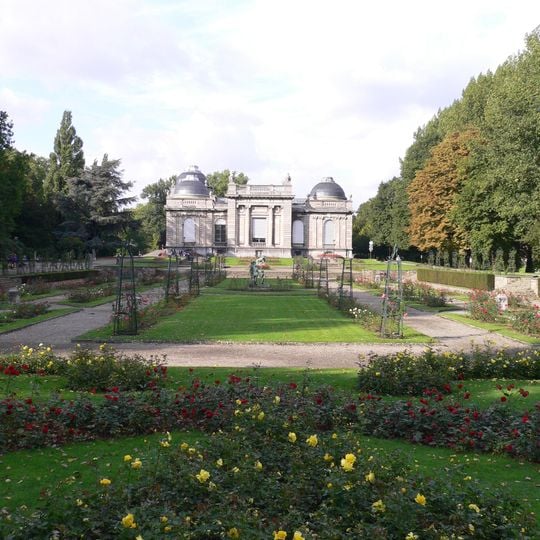
Parc de la Boverie occupies the southern tip of the Outremeuse island in Liège, between the Meuse and the Dérivation canal. Its long lawns lead to the 1905 Palais des Beaux-Arts, a symmetrical stone building with a four-column portico and two lower wings capped by dark grey domes. Gravel paths, grass plots and rose beds fill the grounds.
The site was already a green area within Liège's city walls in the 14th century. The island of Outremeuse took shape in the mid-19th century when the Meuse was straightened and the Dérivation canal dug; the city held a design competition in 1857, won by Julien-Étienne Rémont, whose plan was combined with elements of Édouard Keilig's and Jean Grinda's entries. In 1874 Hubert-Guillaume Blonden, the city's public works engineer from 1857 to 1881, replaced the small pavilions, restaurants and animal cages with lawns planted with trees.
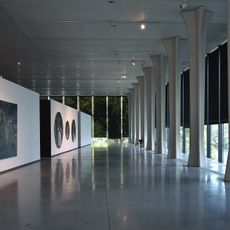
The Musée de la Boverie, housed in a former Palace of Fine Arts, displays international art exhibitions and permanent collections that visitors encounter throughout their walk. The institution shapes the cultural character of the grounds and draws people interested in both contemporary and classical artistic works.
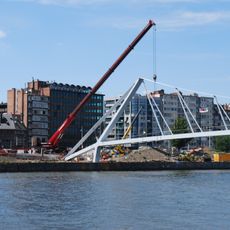
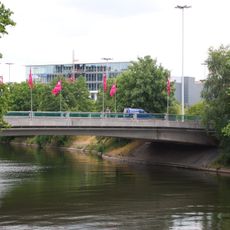
The grounds are accessible daily through multiple entrances, including access points along Boulevard d'Avroy and via the Kennedy bridge for visitors with different preferences. These access points make it easier for pedestrians and cyclists to explore the area.
The park's name comes from the Latin bovaria, meaning cattle shed or stock farm, a reminder that this land was farmland before becoming a park. The southern tip of Outremeuse island was only created in the mid-19th century, when the Meuse was straightened and the Dérivation canal dug.
The community of curious travelers
AroundUs brings together thousands of curated places, local tips, and hidden gems, enriched daily by 94,920 contributors worldwide.