Palais des Beaux-Arts de Liège, Art museum in Liège, Belgium
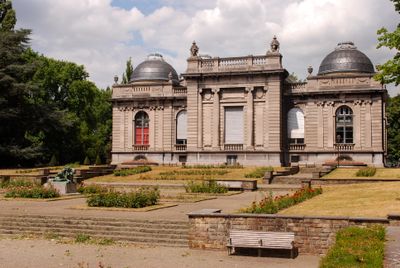
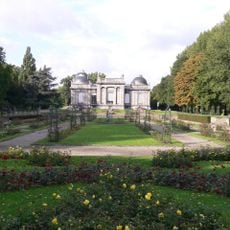
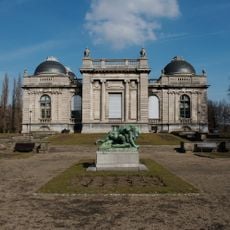
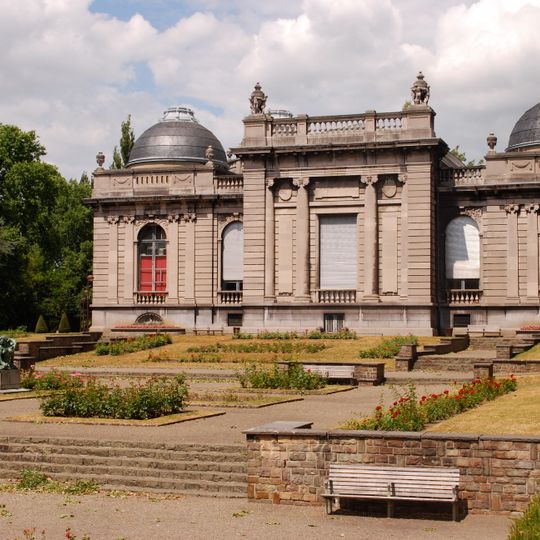
The Palais des Beaux-Arts is a neo-classical building at the centre of the Parc de la Boverie in Liège, designed by Charles Étienne Soubre and Jean-Laurent Hasse. Its pale grey ashlar facade has a taller central block with four fluted pilasters and a balustraded parapet topped by three sculpted urns, flanked by recessed wings with large arched windows. Three allegorical bas-reliefs by Oscar Berchmans, depicting Painting, Architecture and Sculpture, sit above the bays facing the Meuse. Since 2016 it has housed the museum La Boverie.
The building was constructed in 1905 for the Liege International Exhibition and remains the sole surviving structure from that world fair. It was later transformed into a museum complex while largely preserving its original architecture.
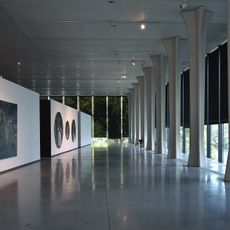
The building hosted the COBRA exhibition in October 1951, a landmark show for the post-war avant-garde. Since 2016 it has housed the combined collections of the former MAMAC, the Fonds ancien and the prints and drawings cabinet, gathered under the name Musée des Beaux-Arts de Liège. The Walloon art collections left for the Saint-Georges complex in 1980.
Visitors should plan to spend several hours to properly explore the galleries and collections. The best time to visit is in the morning when it is less crowded, and it is advisable to check current exhibitions before your visit.
The 1905 building was the only pavilion of the Liège International kept after the fair. Its three allegorical bas-reliefs by Oscar Berchmans, over the bays facing the Meuse, show Painting, Architecture and Sculpture. The 2013–2015 conversion added a wing by Rudy Ricciotti on the Dérivation side.
The community of curious travelers
AroundUs brings together thousands of curated places, local tips, and hidden gems, enriched daily by 95,573 contributors worldwide.