Inclined plane of Liège, Cable-hauled railway incline in Liège, Belgium
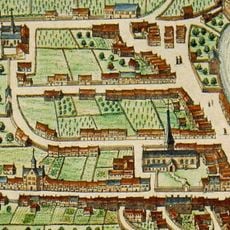
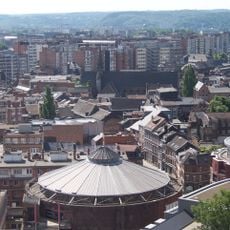
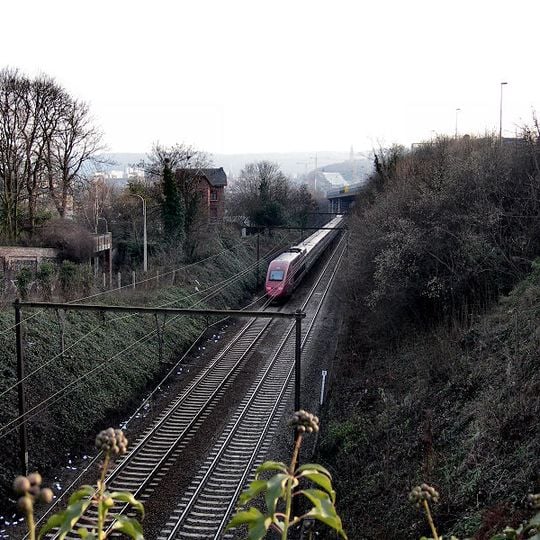
The inclined plane of Liège is the steep section of railway line 36 between Liège-Guillemins and Ans, climbing about 110 m from the Meuse valley to the Hesbaye plateau at a gradient of roughly 30 mm per metre. From 1842 a fixed steam engine at Haut-Pré, in today's Burenville district, hauled trains up by cable attached to a special sled wagon with a clamp. The buildings were demolished in 1879 and the line is now worked by electric trains.
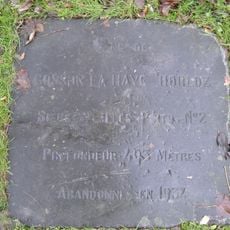
The inclined plane was built to link Liège, in the Meuse valley, with Ans on the Hesbaye plateau, a height difference of about 110 m. Engineer Henri Maus designed the cable system and contractor Henri Borguet built it at Haut-Pré; the first train was hauled up on 1 May 1842. Locomotives became powerful enough by 1871, and the buildings were demolished in 1879.
The name survives in two streets: Rue du Plan Incliné in Liège, running about a kilometre from Guillemins station along the track bed, and a street of the same name in Ans beside the incline itself. The Haut-Pré stop served omnibus trains until the 1980s; its platforms were later razed, leaving only the names of Place du Haut-Pré and Rue du Haut-Pré.
The incline is a working section of line 36 between Liège-Guillemins and Ans, not a ride for visitors; the old cable machinery at Haut-Pré was demolished in 1879. Only drivers specially trained for it may work trains up or down the grade. The Rue du Plan Incliné in Liège runs from Guillemins alongside the tracks toward the site, and a street of the same name in Ans follows the incline itself.
The cable was gripped by a special wagon, called a wagon-traîneau or wagon-patin, whose jaws clamped onto the moving rope to haul trains up from Liège. The Haut-Pré site later served as a stop for omnibus trains until the 1980s; only the names place du Haut-Pré and rue du Haut-Pré remain.
The community of curious travelers
AroundUs brings together thousands of curated places, local tips, and hidden gems, enriched daily by 94,989 contributors worldwide.