Église Saint-Christophe, Gothic parish church in Liège, Belgium.
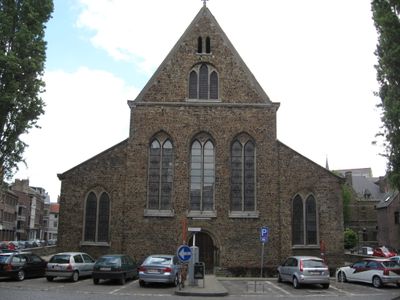
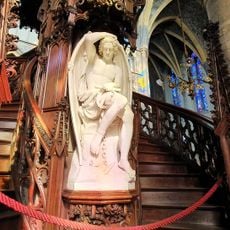
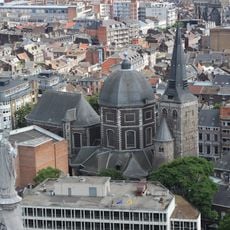
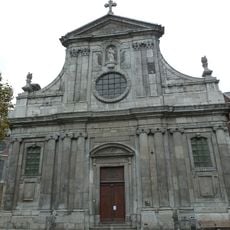
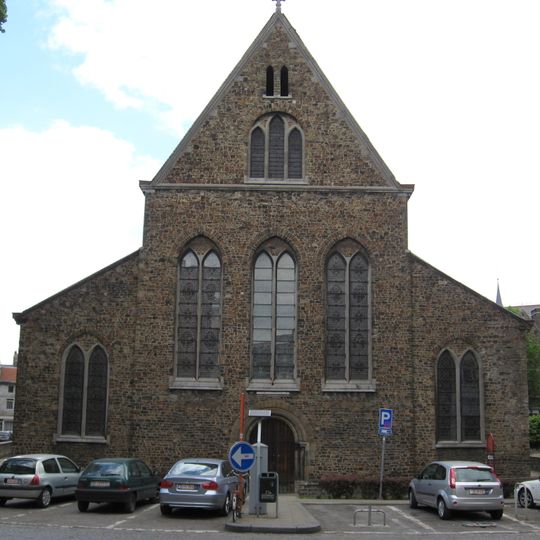
Église Saint-Christophe is a church built from coal sandstone in a transitional Romanesque-Gothic style, with a cruciform plan under a saddleback roof and a simple crossing tower. Its facade shows rough brown-grey rubble masonry, a steep gable topped by a cross, a triple-lancet window and tall pointed-arch windows. Inside, the nave has wooden vaults and a flat chevet, with 18th-century stucco added around 1777.
The building was constructed around 1240 and originally served as both a parish church and a beguinage church, a community of unmarried religious women. This dual purpose made it an important religious center in medieval Liège.
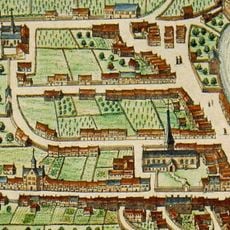
The church was built for the Beguines of Saint-Christophe, a community of religious women that grew to 1,500 by 1241, when the Archbishop of Cologne Konrad von Hochstaden issued them a charter. The beguinage was traditionally attributed to Lambert le Bègue (1131–1177), though the first religious building on the site went up between 1179 and 1183, after his death.
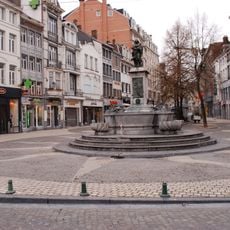
The church stands on Place Saint-Christophe in the Saint-Gilles district, west of the Avroy bridge, outside the medieval city wall. The recessed round-arched entrance with its dark door faces the square, and a small plaque sits above it. The building is a protected monument, so visits depend on parish use.
In 2025 a cannonball was found in the roof timberwork of the crossing tower. It was fired by artillery under Jean de Hangest during William of Orange's brief siege of Liège in 1568. The church is likely the oldest surviving beguinage church in Europe, built from 1240.
The community of curious travelers
AroundUs brings together thousands of curated places, local tips, and hidden gems, enriched daily by 93,803 contributors worldwide.