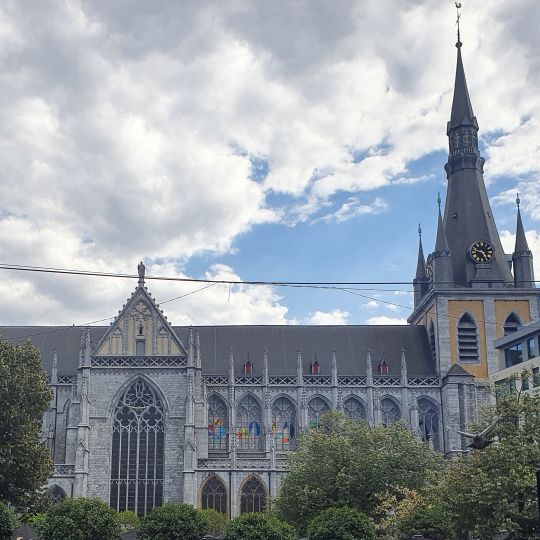
Liège Cathedral, Gothic cathedral in Liège, Belgium
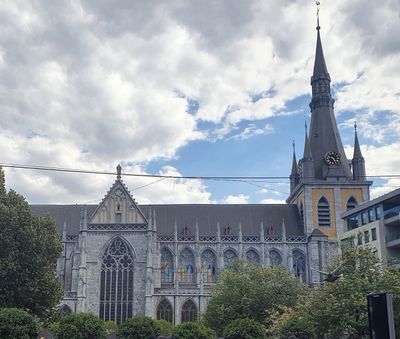
Liège Cathedral, formerly the collegiate church of St. Paul, is a Gothic building with a 13th-century nave, transept and choir, and a pentagonal apse in the Rayonnant style added in the 14th century. Its square bell tower, topped by a slender spire, has four bells on each side. The portal lintel bears the inscription Sancta Legia Ecclesiae Romanae Filia.
Bishop Eraclus ordered the original church built in 967, but centuries later it was rebuilt between the 13th and 15th centuries and transformed into a Gothic cathedral. This period of renewal shaped the building we see today.
The name recalls a legend: Bishop Eraclus hesitated over where to build, and the next morning snow lay everywhere except one patch on the island in the Sauvenière arm of the Meuse, marking the site. The church was consecrated on 7 May 972 by Notger, who installed thirty canons after absorbing the priests of Chèvremont.
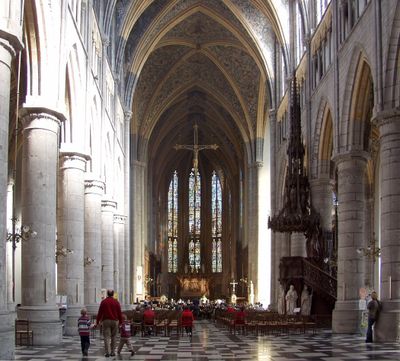
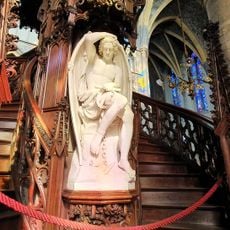
The entrance portal carries the inscription Sancta Legia Ecclesiae Romanae Filia, once used on the city seal. Inside, the choir stalls and checkerboard floor lie straight ahead beneath the stained-glass windows, while the raised wooden pulpit stands to the right of the nave. The tower's upper gallery and spire are 19th-century additions.
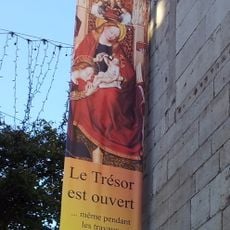
The cathedral preserves a collection of religious objects that came from the earlier Cathedral of Saint Lambert after it was destroyed during the French Revolution. These items show how the history of other churches lives on within these walls.
The community of curious travelers
AroundUs brings together thousands of curated places, local tips, and hidden gems, enriched daily by 93,443 contributors worldwide.