Jardin du Roi, Historical garden between Avenue Louise and Ixelles ponds, Belgium
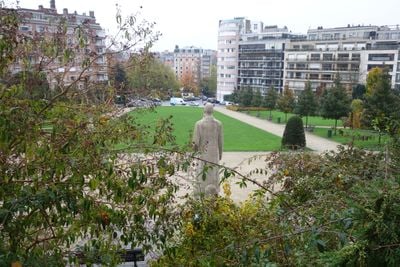
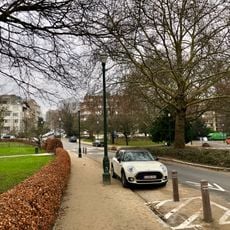
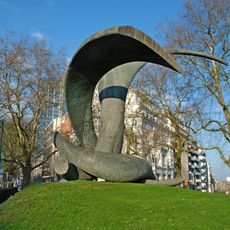
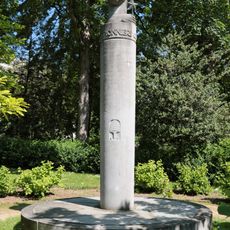
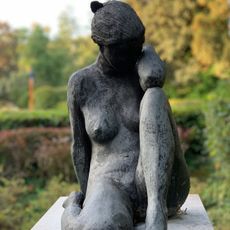
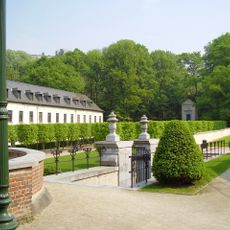
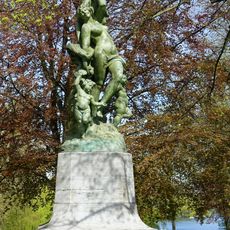
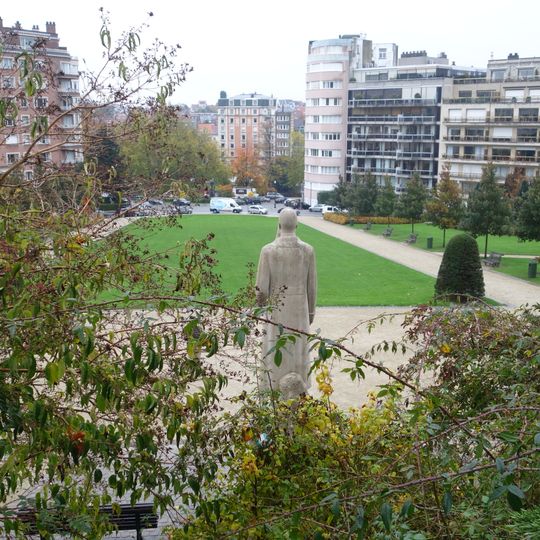
The Jardin du Roi is a public park of 1.49 hectares straddling the boundary between the City of Brussels and Ixelles, bounded by the Avenue Louise roundabout and the rues de la Vallée, du Buisson, de Belle-Vue and du Monastère. Its centre is a rectangular lawn flanked to the north and south by two circular beds enclosed in hornbeam hedges, each holding a playground. Four sculptures stand aligned on the lawn's axis, from the Phénix 44 on the roundabout down to the Renard bust.
Victor Besme, inspector of suburban roads for Brussels, planned a public garden here alongside the Avenue Louise, completed in 1866; a proposed Palace of Fine Arts was dropped but Leopold II kept the garden idea. The king bought the 1.59-hectare site from the Société de l'Avenue Louise on 16 September 1873 and had it laid out to Besme's plans; it opened in 1876 at his expense. He gave it to the Belgian State in 1900-1901 through the Royal Donation, and the communal council fixed the name Jardin du Roi on 29 May 1969.
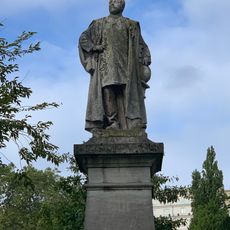
The park's official name, Jardin du Roi, was decided by a Brussels municipal council vote on 29 May 1969, the same year René Cliquet's statue of Leopold II was erected. Its pedestal reads: "He created this garden and donated it for our rest and our joy." The king's head is turned toward the Ixelles ponds.
The garden has multiple entry points and features children's play areas arranged throughout the space. The gentle slope makes it easy to walk and explore for visitors of any mobility level.
The upper sections of the garden contain plane trees that are over a century old, their size and presence commanding the space. These trees frame the formal layout below and create a natural backdrop for the entire composition.
The community of curious travelers
AroundUs brings together thousands of curated places, local tips, and hidden gems, enriched daily by 93,507 contributors worldwide.