Citadel of Ghent, Citadel in Ghent, Belgium
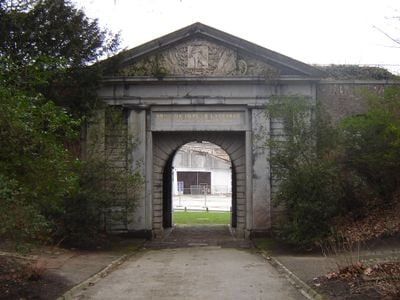
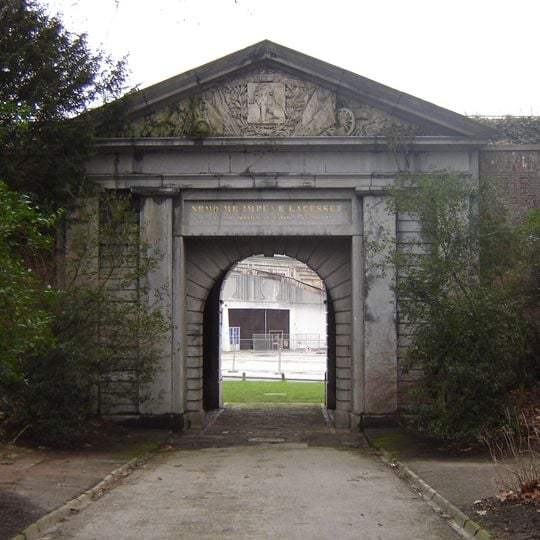
The Citadel of Ghent was a fortification built from 1819 on the site of the earlier Fort Monterey. Only its gateway survives, a grey stone arch with a triangular pediment carved with relief figures and a central standing figure. Below the pediment, a gold inscription reads NEMO ME IMPUNE LACESSET.
Construction was decided on 1 May 1819 as part of the Wellington Barrier, but the plans of major Gey van Pittius were only approved in 1821 and work began on 27 May 1822. The first stone was laid on 15 April 1823 at the corner of bastion no. 2. In October 1830 the unfinished citadel, held by Andries des Tombe, surrendered to Belgian volunteers who left with their weapons. Demolition came in 1907, leaving only the gatehouse for the 1913 world exhibition.
The site now hosts multiple museums including SMAK for contemporary art and MSK for fine arts that draw visitors from across the city. Together with a botanical garden, it creates a space where art and nature exist side by side for public enjoyment.
The grounds are accessible 24 hours daily and offer playgrounds, picnic areas, and a music kiosk for visitors. The various museums have different opening hours, so it is worth checking ahead before your visit.
The only surviving structure is the entrance gate, whose pediment originally carried the Dutch lion; after Belgian independence it was replaced by the Belgian lion. The Latin motto Nemo me impune lacesset, "No one provokes me with impunity", is still carved on the gate.
The community of curious travelers
AroundUs brings together thousands of curated places, local tips, and hidden gems, enriched daily by 95,293 contributors worldwide.