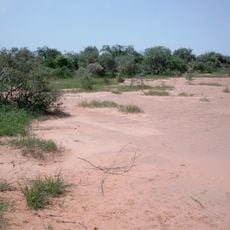
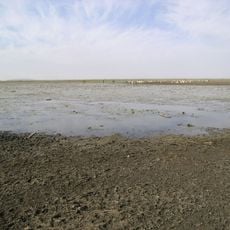
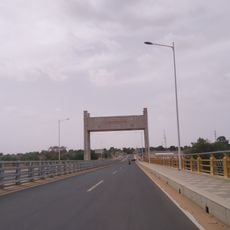
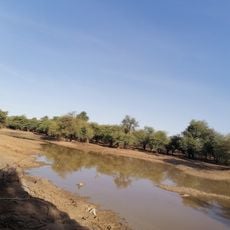
Bura culture, Archaeological site in Tillabéri Region, Niger and northeastern Burkina Faso
The Bura culture is a set of Iron Age archaeological sites in the lower Niger River valley, centred in southwest Niger and southeast Burkina Faso and named after the Bura site near Bura in southwest Niger. Its burial grounds held terracotta jars used in ritual sacrifice, with quartzite beads, brass nose rings and iron or brass bracelets beneath them, alongside hooked iron arrowheads. The culture also produced the earliest terracotta equestrian statuettes in the Niger basin.
The Bura-Asinda culture was radiocarbon dated to the 3rd through 13th centuries AD, centred in southwest Niger and southeast Burkina Faso. The site was only discovered in 1975, and the first archaeological excavation began in 1983. Iron smelting and forging had already developed in West Africa by 1200 BC.
The name comes from the Bura site near Bura in southwest Niger. Terracotta jars there served funerary rites, and beneath them excavators found quartzite beads, brass nose rings and iron or brass bracelets on human remains. Hooked iron arrowheads were found alongside the jars.
The site remains partially excavated with ongoing research by international teams documenting newly found artifacts. Visitors should check local access conditions before visiting and be prepared for a remote location with minimal facilities.
The Bura culture was only identified in 1975, and the first archaeological excavation did not begin until 1983, so much about it remains unknown. Its terracotta equestrian statuettes are the earliest of their kind in the Niger River basin.
The community of curious travelers
AroundUs brings together thousands of curated places, local tips, and hidden gems, enriched daily by 93,466 contributors worldwide.