Ustra Fortress, Medieval fortress ruins in Kardzhali, Bulgaria
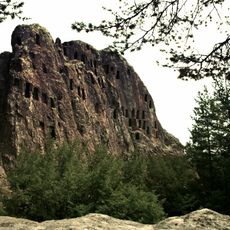
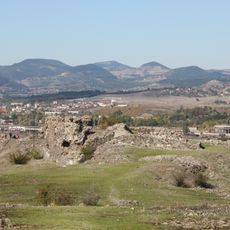
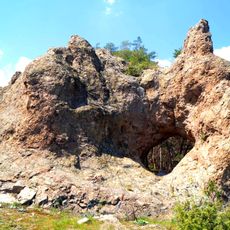
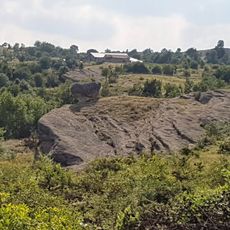
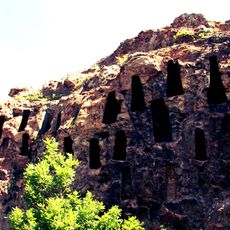
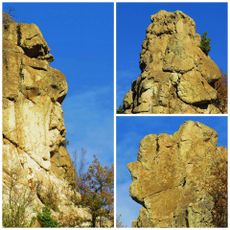
Ustra Fortress occupies a 1,290 m² open quadrangle shaped like the Cyrillic letter "П" on a steep rocky peak. Its 113 m wall, 2.8 m thick at the base, survives to 8–10 m and is faced with dressed stone and white mortar. Three towers—one semicircular, two rectangular—had first floors used as reservoirs, and seven rock-cut steps lead to the eastern entrance.
The fortress originated in the 10th century under Constantine VII and changed hands repeatedly between Byzantine and Bulgarian rulers. Ottoman forces took control in the 14th century, marking the end of its role as a major defensive position.
This fortress served as a crucial outpost where Byzantine and Bulgarian communities coexisted, leaving traces in its construction style and found objects. Local people adapted the space to defend their territory and maintain trade routes through the mountains.
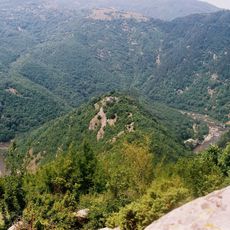
Two climbing routes lead to the fortress, one from the village of Lebed offering an easier path and another from Ustren with information markers. Wear sturdy shoes as the ground is uneven and the ruins are fully exposed on the hilltop without shelter.
Excavations in the 1970s unearthed over 1,000 artifacts including iron arrows, bronze crosses, and silver coins spanning multiple periods. These discoveries reveal that the site remained continuously inhabited and used for an extended time span.
The community of curious travelers
AroundUs brings together thousands of curated places, local tips, and hidden gems, enriched daily by 94,307 contributors worldwide.