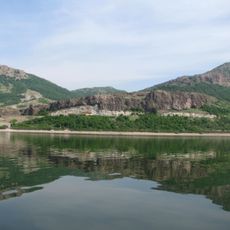
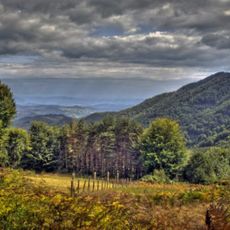
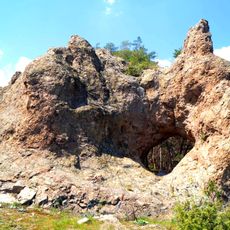
Kardzhali Reservoir, Reservoir in Kardzhali Province, Bulgaria.
Kardzhali Reservoir is a large body of water in the mountainous region near Kardzhali, created by damming a river to control its flow. It supplies water for irrigation, electricity generation, and serves as part of a larger system of interconnected dams.
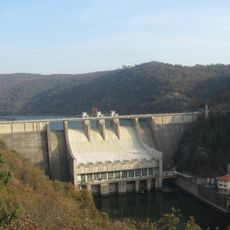
Construction of the dam ran from 1957 to 1963, but talc-chlorite schist lenses and a tectonic fault in the left slope forced work to continue until 1976, with Soviet and French consultants involved. Partial filling began in April 1970 to elevation 295 m. The reservoir was filled to 315 m and officially commissioned in 1977; the last filling limits were lifted in 1982.
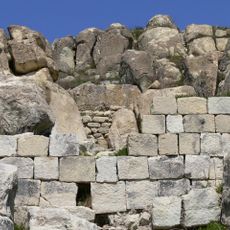
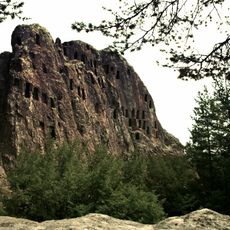
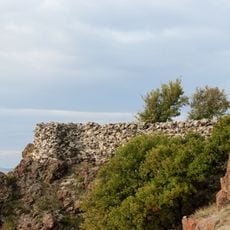
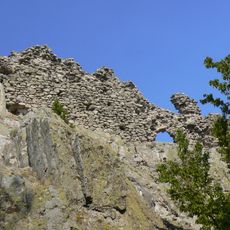
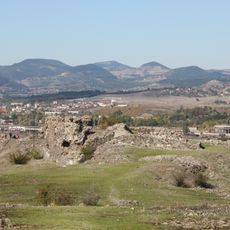
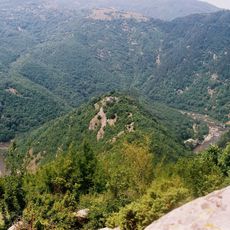
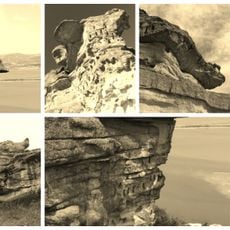
The reservoir's shores hold the horseshoe meander Zavoya and the ruins of the medieval Patmos Fortress, both reachable from the water's edge. The dam wall itself gives a panoramic view over part of the lake and the town of Kardzhali. Anglers come for European perch stocked from the Ovcharitsa Reservoir and for catfish introduced in the 1970s, some reaching 100 kg.
The dam wall stands about a kilometre west of Kardzhali and is reached via the first class I-5 road; the crown offers a panorama over part of the reservoir and the town. The reservoir lies at 331 m in the eastern Rhodopes, so banks are steep and paths unmarked. Along the shore are the horseshoe meander Zavoya and the ruins of the medieval Patmos Fortress.
The dam is Bulgaria's only concrete arch-gravity dam, 103.5 m high and third tallest in the country. Its 25 blocks form a water-side face curved as a vertical cylinder with a 150 m radius. Instruments mounted on the wall monitor its condition continuously because of the talc-chlorite schist lenses found beneath the foundation.
The community of curious travelers
AroundUs brings together thousands of curated places, local tips, and hidden gems, enriched daily by 93,846 contributors worldwide.