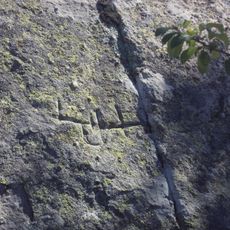
Asar kaya, Megalithic site near Zhenda, Bulgaria
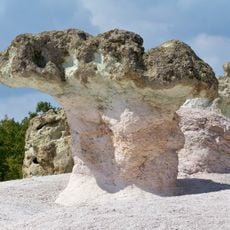
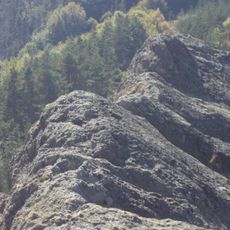
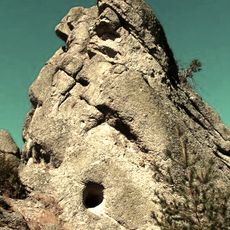
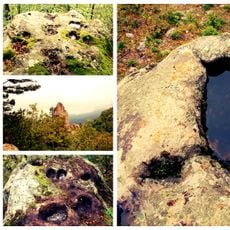
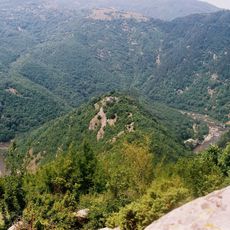
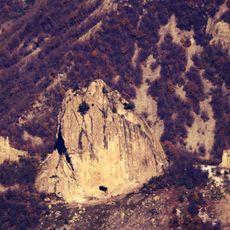
Asar Kaya is a rock outcrop shaped like a giant mushroom, with trapezoidal niches carved into its east and west sides near the top. It stands 150–200 m below the Thracian fortress of Boyuk Tepe, southeast of Zhenda in Kardzhali Province. A path with steps cut into the rock leads to it, and a large rectangular stone, likely an altar, survives at its western base.
The mushroom-shaped rock is part of a rock-cut cult complex linked to the Thracian fortress of Boyuk Tepe, whose rocks bear trapezoidal niches, grooves and basins. A path with steps cut into the stone, used since antiquity, leads to Asar Kaya about 150–200 m below the fortification. A large rectangular stone, probably an altar, survives at its western base.
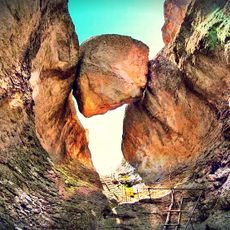
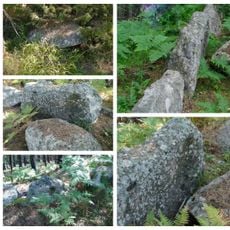
The trapezoidal niches cut into the mushroom-shaped rock face east and west toward its top are the site's main carved feature; no animal or human figures are recorded there. Near the western base lies a large rectangular stone, apparently shaped by hand and probably an altar. Two massive rock pieces stand by the low eastern side, and the layout forms three viewing corridors: east, north and south.
The site can be reached by walking a path of about 1.8 kilometers from the main road sign or by driving closer on an unpaved but manageable road. Sturdy footwear is recommended since the terrain is uneven and some sections have steep inclines.
The mushroom-shaped rock stands 150–200 m below the Boyuk Tepe fortress, not 100 m. A large rectangular stone, likely an altar shaped by human hands, survives at its western base, and two massive rock blocks lie near the low eastern side. The layout forms three observation corridors: east, north and south.
The community of curious travelers
AroundUs brings together thousands of curated places, local tips, and hidden gems, enriched daily by 93,760 contributors worldwide.