Орлови скали, Ancient megalithic complex near Sarnitsa, Bulgaria
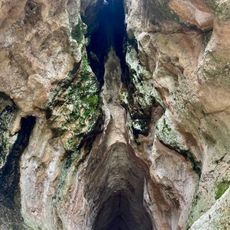
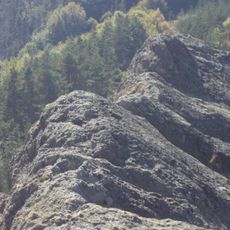
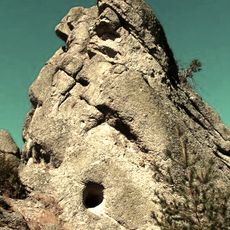
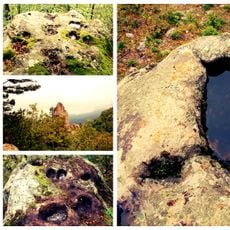
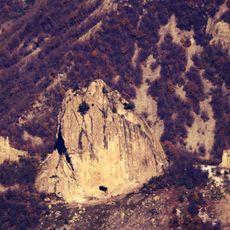
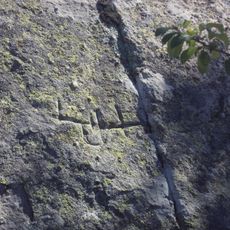
Orlovi Skali near Sarnitsa is a megalithic rock formation with approximately 97 trapezoidal niches carved into volcanic stone walls reaching up to 30 meters in height. The niches vary in size and depth, creating a geometric pattern across the entire stone face.
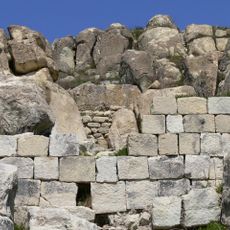
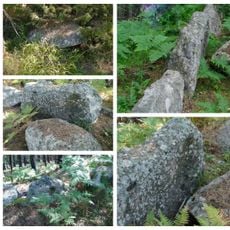
The site was declared a natural landmark by decree No. 1427 of 13 May 1974. In March 2016, Prof. Ana Raduncheva and Assoc. Prof. Stefanka Ivanova conducted fieldwork here after Miroslav Chobanov's photographs drew attention to a human profile in the rocks. Raduncheva dated ceramic fragments found on site to the second half of the 4th millennium BC, linking the sanctuary to the Eastern Rhodope system that includes Belintash, Tatul, Perperek and Gluhite Kamani. A fortress wall of dry-laid broken stone from the early Iron Age survives to about 1.2 m.
The site's Turkish name, Dogan Kaya, means Falcon Rocks, and the Bulgarian name Orlovi Skali means Eagle Rocks. In February 2016 photographer Miroslav Chobanov published images of a human profile shaped in the rock, prompting archaeologists Ana Raduncheva and Stefanka Ivanova to survey the site that March.
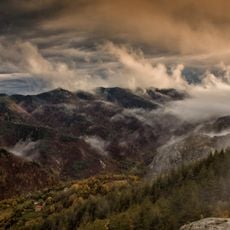
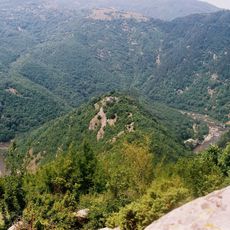
The sanctuary lies about 3 km west of Sarnitsa's centre, in the Eastern Rhodopes. The site has no visitor facilities, so bring water and wear footwear for uneven rock; the climbable faces are used for rock climbing. A fortress wall about 1.2 m high survives in situ, and a stone rampart lies roughly 10 m in front of the lower rock mass.
The Turkish name is Doğan Kaya, meaning Falcon Rocks, not Raven Stone. In February 2016 photographer Miroslav Chobanov posted images of a human profile about 30–40 m up, prompting archaeologists Ana Raduncheva and Stefanka Ivanova to survey the site that March; Raduncheva judged the male profile man-made, cut with stone tools.
The community of curious travelers
AroundUs brings together thousands of curated places, local tips, and hidden gems, enriched daily by 94,049 contributors worldwide.