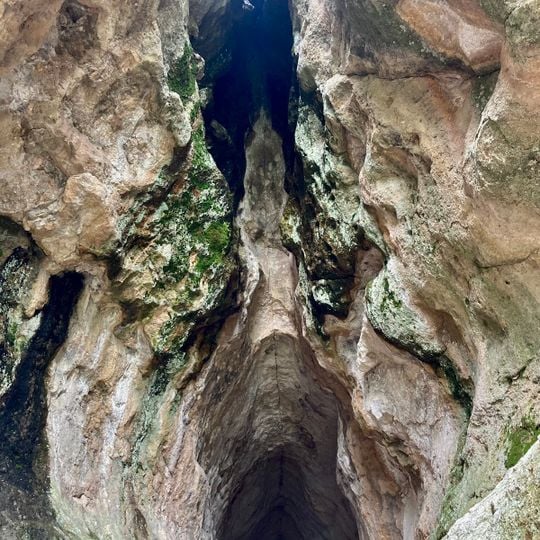
The Womb, Cave sanctuary in Kardzhali Province, Bulgaria
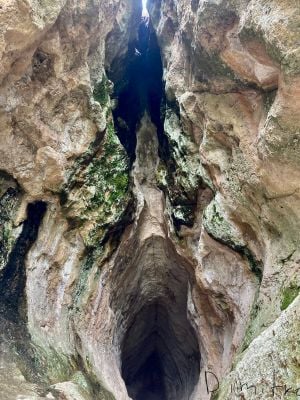
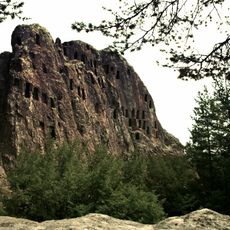
The Womb is a limestone sanctuary in eastern Bulgaria with an entrance positioned two meters above ground level leading to a 22-meter horizontal passage. Access is through a steep natural slope reaching a three-meter-high opening that narrows into a passage widening toward a smaller chamber at the rear.
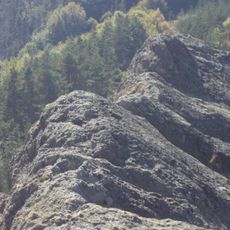
The cave was formed in Cretaceous limestone along a tectonic fissure; the last 6 metres of its 22-metre passage were cut by hand. Local goatherds showed the site to speleologist Mincho Gumarov on 20 March 1994, and he kept its location secret for eight years. In 2002 he brought archaeologist Nikolay Ovcharov, who interpreted the carved niches and altar as a Thracian fertility sanctuary.
The popular name comes from the carved openings and elongated main chamber that together resemble the shape of a human womb. Visitors can see the carvings on the walls representing niches for offerings and ritual objects, linking the site to fertility rites.
Hiking trails starting from Borovitsa Hotel lead to the site in about an hour on foot. The climb to the opening requires sturdy footwear, and a flashlight is useful for seeing the rear areas and wall details.
The cave's local Turkish name, Tangardak Kaya, means "thundering rock": a hemispherical dome carved mid-chamber resonates only to low male voices, rolling like thunder through the hollow. The teacher-speleologist Mincho Gumarov kept the site's location secret for eight years, until 1994, on the advice of museum director Pavel Petkov.
The community of curious travelers
AroundUs brings together thousands of curated places, local tips, and hidden gems, enriched daily by 92,694 contributors worldwide.