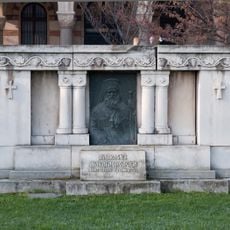
Principality of Bulgaria, Historical monarchy in Bulgaria
The Principality of Bulgaria was a partially independent state covering northern and central regions of present-day Bulgaria, with Veliko Tarnovo and later Sofia as administrative centers. It developed institutions including schools, a national currency, and railway connections that drove economic development.
The Principality emerged in 1878 through the Berlin Treaty following the Russo-Turkish War as an autonomous state under Ottoman suzerainty. This arrangement marked the end of four centuries of direct occupation while preserving Ottoman nominal authority.
The Principality revived Bulgarian national identity by supporting education and literature through new institutions. Bulgarians could reclaim their cultural voice after centuries under Ottoman rule.
The Principality initially lacked a single central capital, making its early administration decentralized across multiple centers. The later relocation of the capital to Sofia reflected how the government chose to reorganize its territorial focus.
The Lev currency was introduced as a national symbol to demonstrate economic independence from Ottoman control. The railway network served less as commercial routes and more as a tool to bind scattered regions under unified administration.
The community of curious travelers
AroundUs brings together thousands of curated places, local tips, and hidden gems, enriched daily by 91,364 contributors worldwide.