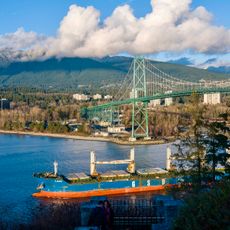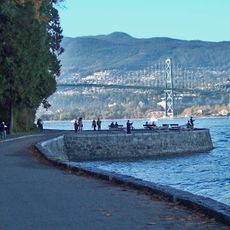
Lions Gate Bridge, Suspension bridge in Vancouver, Canada.
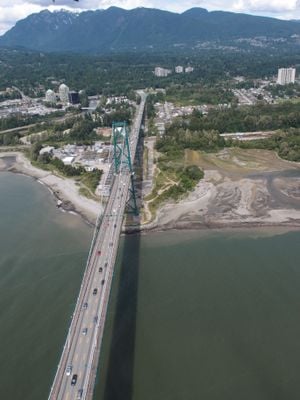
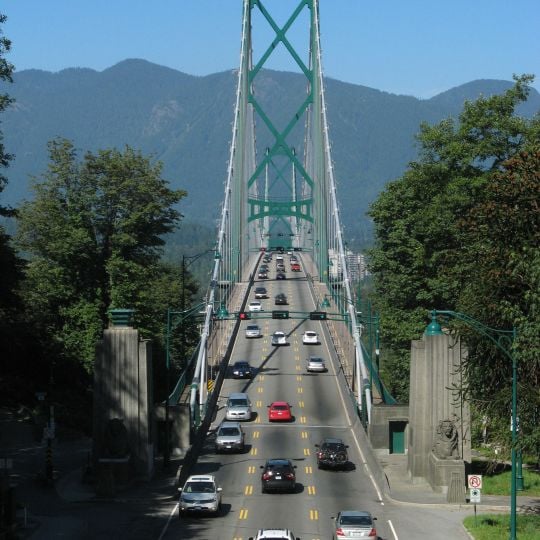
The Lions Gate Bridge is a two-tower steel suspension bridge across the First Narrows of Burrard Inlet, its towers braced with green X-shaped cross-bracing and carrying two main cables with vertical suspender ropes. The deck holds three lanes marked in yellow, and two light-grey concrete pillars topped with green lamps flank the southern entrance, where a 20 km/h sign stands. Its main span is 473 metres, the towers rise 111 metres, and clearance above the water is 61 metres.
Officially opened on November 14, 1938, this bridge was constructed during the Great Depression at a cost of approximately CA$5.87 million, representing one of Canada's largest infrastructure projects of the 1930s.
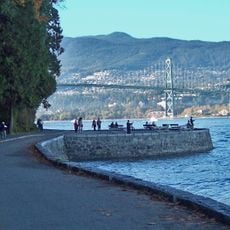
The name comes from the Lions, two peaks north of Vancouver that northbound traffic faces; the bridge's official name is First Narrows Bridge. At the south approach in Stanley Park stand two cast concrete lions by sculptor Charles Marega, placed in January 1939. The Guinness family's 1986 gift of 170 decorative lights, designed by British engineer Ian Hayward and first lit on February 19, made the span a nighttime landmark.
Traffic runs in three lanes, the centre one reversible and controlled by signals; trucks over 13 tonnes and vehicles with studded tires are banned. Counts reach 60,000–70,000 vehicles a day. Sidewalks of about 2.7 metres run on both sides, cantilevered outside the main cables since the 2000–2001 deck replacement.
The entire suspended structure was replaced between 2000 and 2001 without disrupting peak-hour traffic, representing a significant engineering achievement while preserving this national historic site of Canada designated in 2005.
The community of curious travelers
AroundUs brings together thousands of curated places, local tips, and hidden gems, enriched daily by 92,767 contributors worldwide.