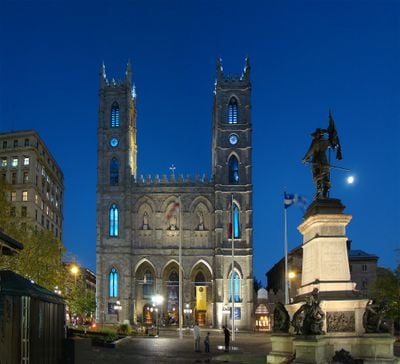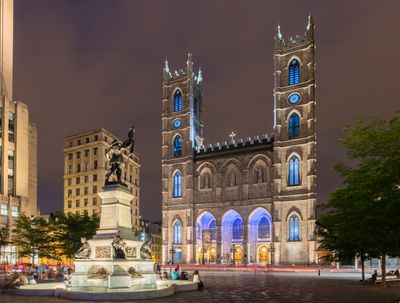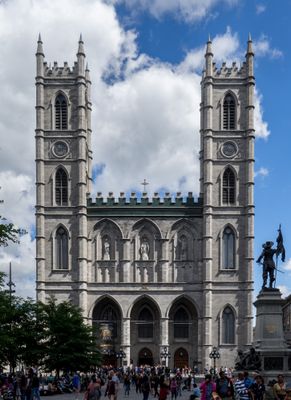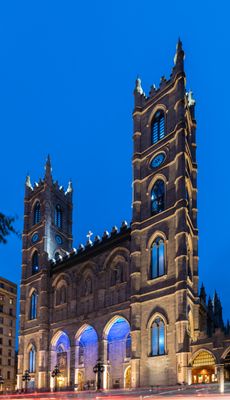
Notre-Dame Basilica, Gothic Revival minor basilica in Old Montreal, Canada
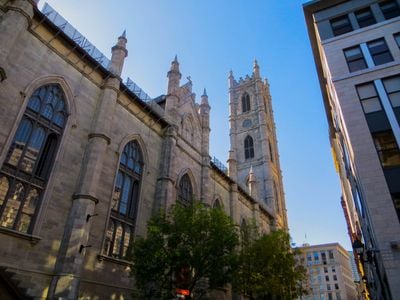
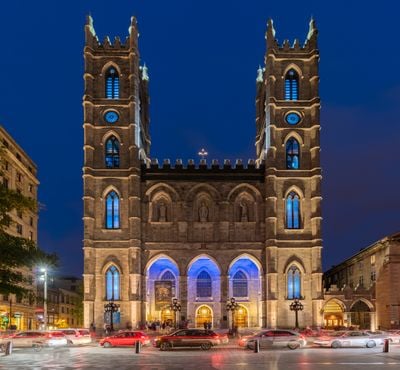
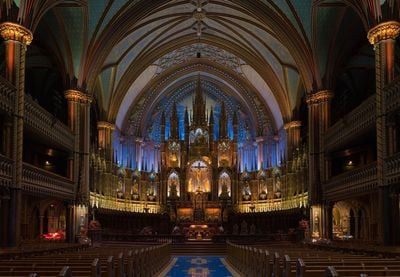
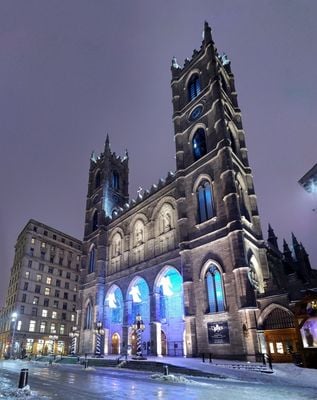
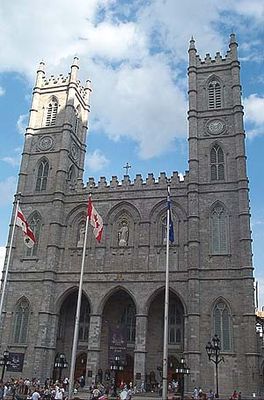
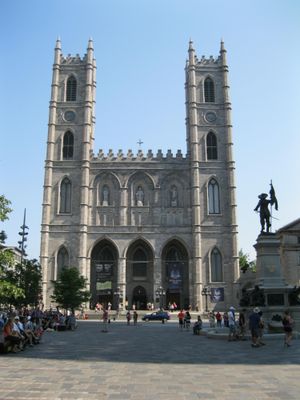
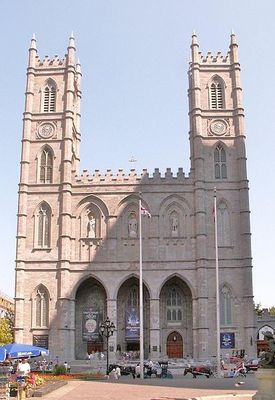
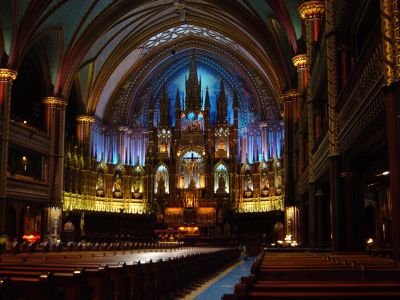
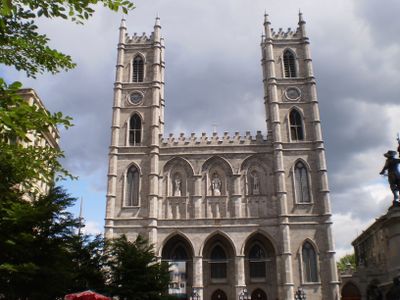
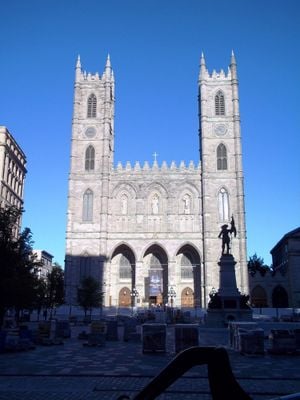
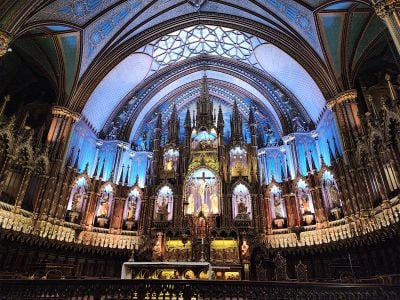
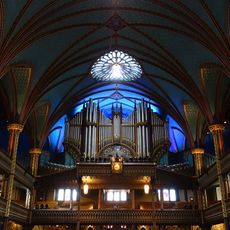
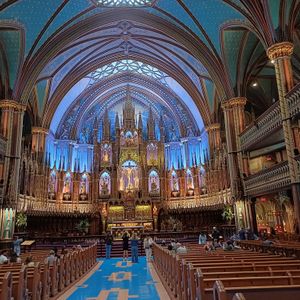
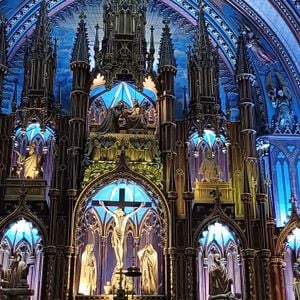
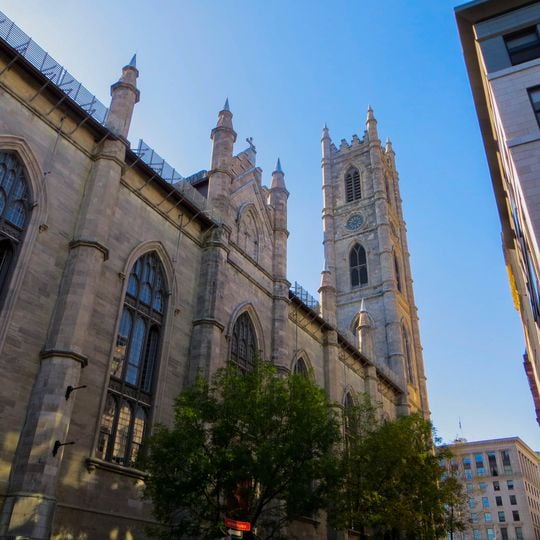
The limestone basilica completed in 1829 rises with two towers reaching 60 meters (197 feet) above Old Montreal. The western tower Perseverance houses a large bell while the eastern tower Temperance contains ten bells. The three-aisled interior displays deep blue vaults with golden stars. The nave seats several thousand worshippers beneath wooden ribs and gilded ornaments.
New York architect James O'Donnell designed the Catholic church in 1824 following neo-Gothic principles, converting to Catholicism and later being interred in the crypt. Main construction concluded in 1829. Pope John Paul II granted the building minor basilica status in 1982. Extensive renovation work began in 2020 and is projected to continue until 2040 to preserve structural integrity.
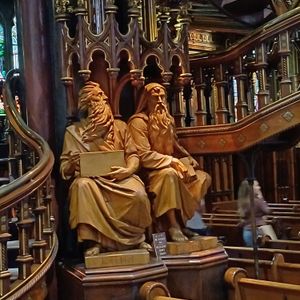
The neo-Gothic church has served as a spiritual center for Montreal's Catholic community for nearly two centuries and now draws hundreds of thousands of visitors annually. The interior showcases Canadian craftsmanship through wood carvings by local artists. Stained glass windows illustrate Montreal's religious history rather than biblical scenes, connecting faith with regional identity. Ongoing liturgical use links historical heritage with contemporary ecclesiastical life.
The basilica stands in Old Montreal within walking distance of metro stations and major transit routes. Guided tours are available in multiple languages. Admission fees apply for visitors while attending services remains free. Visitors should currently expect ongoing renovation work that may affect certain areas. Photography is permitted inside under specific conditions. An on-site gift shop sells religious articles and memorabilia.
The Casavant organ installed in 1891 and restored in 1991 ranks as North America's second-largest church organ and regularly contributes to musical performances and masses. Victor Bourgeau completed the interior decoration over several decades. Architect O'Donnell converted to Catholicism during construction, unusual for a Protestant American architect of the era, and was later interred in the church crypt, a rare resting place for a non-cleric.
Location: Ville-Marie
Inception: 1820s
Architects: James O'Donnell
Architectural style: Gothic Revival
Height: 60 m
Length: 68 m
Width: 46 m
Accessibility: Wheelchair accessible
Made from material: limestone
Part of: Old Montreal
Address: 110, rue Notre-Dame Ouest
Opening Hours: Monday-Friday 09:00-16:30; Saturday 09:00-16:00; Sunday 12:30-16:00
Phone: +15148422925
Email: basilique@fabriquenotredame.ca
Website: https://basiliquenotredame.ca/en
GPS coordinates: 45.50444,-73.55611
Latest update: December 1, 2025 08:38
Photo license: CC BY-SA 4.0
This collection presents neogothic architecture from the 19th and early 20th centuries, when architects across Europe, the Americas, Asia and Oceania revived medieval building forms. The movement began in Britain and spread worldwide, employing pointed arches, flying buttresses, ribbed vaults and stone spires. This architectural language was used for churches, universities, government buildings and railway stations. The collection includes religious structures like Cologne Cathedral and Notre-Dame Basilica in Montreal, government buildings such as the Parliament Complex in Ottawa and the Palace of Westminster in London, educational institutions like the University of Glasgow Main Building, and transport hubs including St. Pancras Station in London and Victoria Terminus in Mumbai. These structures demonstrate how architects adapted medieval techniques to modern building materials and functions.
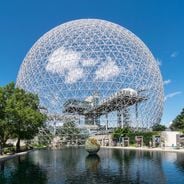
Quebec provides varied photographic settings across a province that combines French colonial heritage with extensive natural landscapes. In Quebec City, the stone buildings of Old Quebec, Fairmont Le Château Frontenac, and Montmorency Falls with its 83-meter drop form key subjects. The historic Quartier Petit Champlain, Frontenac Staircase, and Grande-Allée display the city's European-influenced architecture, while the Plains of Abraham and Observatoire de la Capitale offer vantage points. Montreal presents different photographic opportunities with Notre-Dame Basilica, Saint Joseph's Oratory on Mount Royal, and contemporary facilities like the Biosphère and Grande Roue. Lachine Canal and street art along Boulevard Saint-Laurent add to urban captures. The Gaspé Peninsula, Jacques-Cartier National Park, Laurentides Wildlife Reserve, and locations like Île d'Orléans and Mont-Tremblant show the province's natural terrain. The Saint Lawrence River connects many of these sites as the primary waterway, from its lower reaches near Rimouski to the riverbanks at Montreal and Quebec City.
Montreal combines historic sites and cultural institutions along the Saint Lawrence River. The city displays its religious past in structures like Notre-Dame Basilica, whose neo-gothic facade dates to the 1820s, and Saint Joseph's Oratory, a Catholic pilgrimage site on Westmount. Mount Royal rises 764 ft (233 m) above the city center, offering views across downtown and the river. Parc Jean-Drapeau spans two former Expo islands and now houses the Biosphere and the Formula 1 track Circuit Gilles-Villeneuve. Cultural facilities include the Museum of Fine Arts, which presents Canadian and European collections, and Pointe-à-Callière, built on archaeological sites from the 17th century. Old Montreal preserves buildings from the French colonial period along cobblestone streets. The Olympic Stadium and Botanical Garden date from different 20th-century construction phases. Markets such as Jean-Talon and Atwater have sold regional produce for decades. The Quartier des Spectacles concentrates performance venues around Place des Arts, while the Underground City connects pedestrian passages beneath downtown.
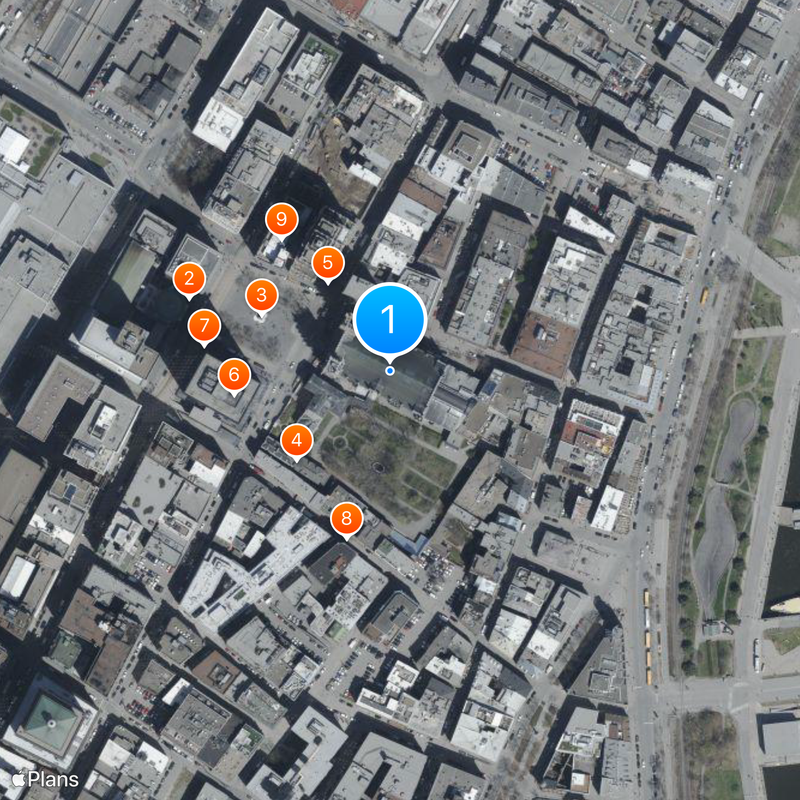
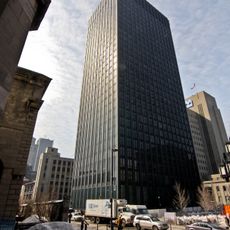
Bank of Montreal Head Office, Montreal
149 m
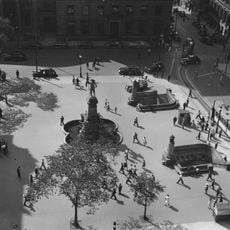
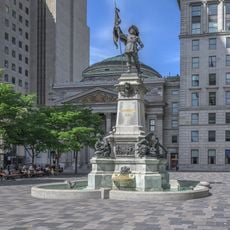
Maisonneuve Monument
98 m
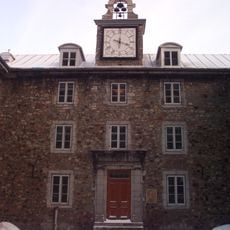
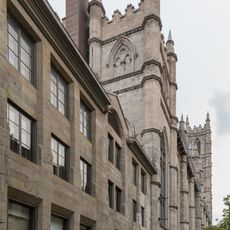
Saint-Sulpice Seminary
90 m
Aldred Building
76 m
500 Place D'Armes
110 m
The English Pug and the French Poodle
131 m
Centaur Theatre Company
120 m
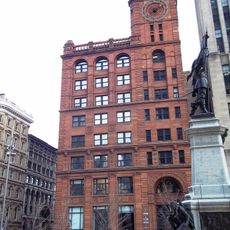
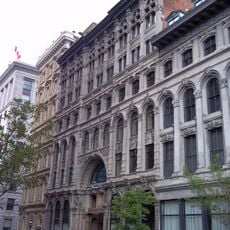
New York Life Insurance Building
119 m
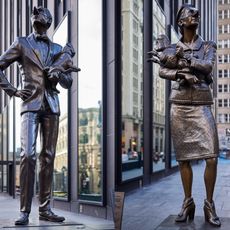
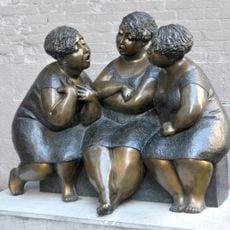
Les chuchoteuses
188 m
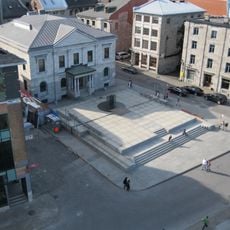
Old Custom House
174 m
Chapelle Notre-Dame du Sacré-Cœur
19 m
Banque du Peuple
151 m
Former Royal Bank of Canada Headquarters
188 m
Pointe-à-Callière: Pavillon de l'Ancienne-Douane
168 m
Montreal Curb Market building
111 m
Immeuble Joseph-Amable-Berthelot
154 m
C. P. R. Telegraph building
139 m
Montreal Stock Exchange Building
100 m
Vieux-Séminaire-de-Saint-Sulpice Heritage Site
62 m
Édifice Thémis
195 m
Alexander Cross Building
163 m
Opus 1032
0 m
Geoffrion-et-Pérodeau Building
160 m
Métropole Building
198 m
Great Scottish Life Insurance Building
145 m
Magasin-entrepôt Charles-Wilson
196 m
Mussen Building
189 m
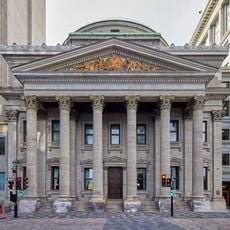
Bank of Montreal
160 mReviews
Real people, real opinions — but not verified.
Visited this place? Tap the stars to rate it and share your experience / photos with the community! Try now! You can cancel it anytime.
Discover hidden gems everywhere you go!
From secret cafés to breathtaking viewpoints, skip the crowded tourist spots and find places that match your style. Our app makes it easy with voice search, smart filtering, route optimization, and insider tips from travelers worldwide. Download now for the complete mobile experience.
A unique approach to discovering new places❞
— Le Figaro
All the places worth exploring❞
— France Info
A tailor-made excursion in just a few clicks❞
— 20 Minutes