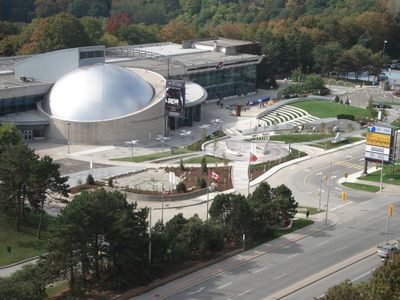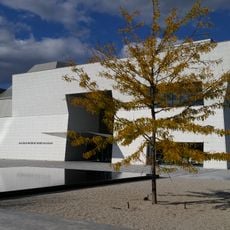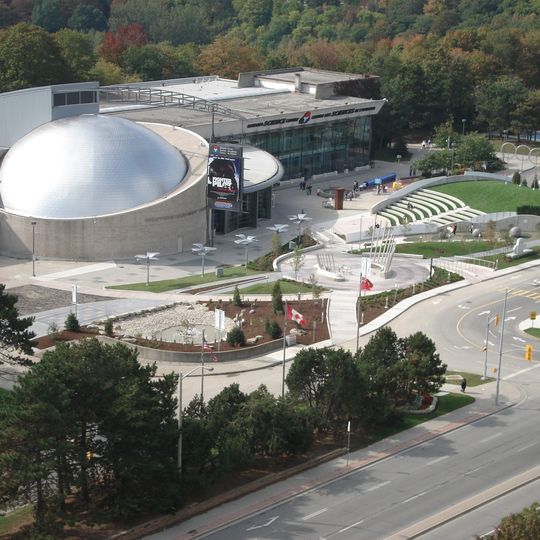
Ontario Science Centre, Science museum in Toronto, Canada.
The Ontario Science Centre is a science museum in Toronto, Canada, that extends across multiple building levels connected by escalators and pedestrian walkways. The exhibition spaces are distributed across different areas and cover topics from physics, biology, technology, and astronomy.
The centre opened in late September 1969 and was designed by architect Raymond Moriyama, who created a modern concrete building with clean lines. The facility arose as part of the celebrations for Canadian scientific progress in the province.
The facility takes its name from the province of Ontario and serves as a meeting point for school groups, families, and curious visitors of all ages. Many exhibits invite touching and experimenting, allowing guests to interact directly with physical phenomena or biological processes.
The museum welcomes visitors from Monday to Friday between 10 AM and 4 PM, as well as on weekends until 5 PM. A visit typically takes several hours, as the exhibitions invite participation and lingering.
The facility also operates traveling exhibitions that stop in different communities across Ontario, offering experiments and demonstrations there. These mobile programs reach places that are far from the main building.
Location: Toronto
Inception: September 26, 1969
Architects: Raymond Moriyama
Accessibility: Wheelchair accessible
Opening Hours: Monday-Friday 10:00-16:00; Saturday-Sunday 10:00-17:00
Website: https://centredessciencesontario.ca
GPS coordinates: 43.71670,-79.33830
Latest update: December 5, 2025 22:24
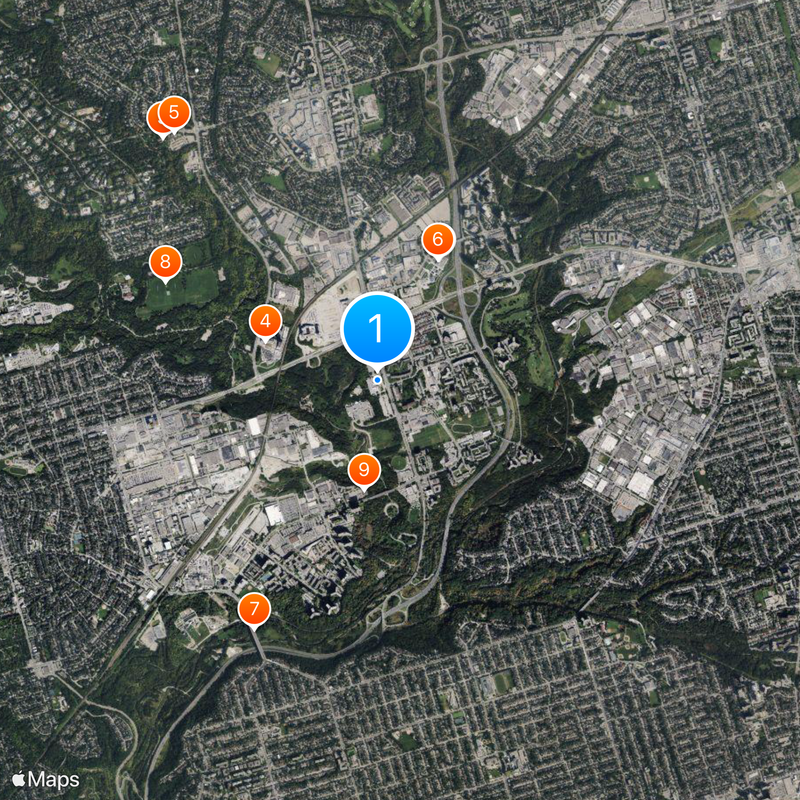
Toronto offers numerous attractions for families with children. The Toronto Zoo in Scarborough houses more than 5000 animals from all continents. The Ontario Science Centre in Don Valley East presents interactive exhibits on science and technology. The Royal Ontario Museum downtown displays collections on natural and cultural history. Recreational facilities include Canada's Wonderland in Vaughan with rides and shows, Ontario Place on the western waterfront, and Centreville Amusement Park on the Toronto Islands. Ripley's Aquarium of Canada in the Entertainment District houses thousands of marine animals. The CN Tower provides observation decks above the city. Fort York interprets early 19th-century military history, while Black Creek Pioneer Village portrays rural Ontario life in the 1860s. Several parks and natural areas are suitable for family outings. The Toronto Botanical Garden in North York displays regional plants. The Scarborough Bluffs rise up to 300 feet (90 meters) above Lake Ontario. Riverdale Farm in the Riverdale neighborhood is a working farm with domestic animals. Tommy Thompson Park on an artificial peninsula serves as a bird sanctuary.
Brutalist architecture emerged in the decades following World War II, producing buildings that challenged conventional design through their honest expression of materials and function. From Le Corbusier's Unité d'Habitation in Marseille to Louis Kahn's National Assembly in Dhaka, these structures define a global movement that prioritized raw concrete, bold geometric forms and exposed construction elements. The style reached across continents, shaping university libraries in Chicago, government buildings in Boston and Chandigarh, residential towers in London, and cultural centers in São Paulo. Each building reflects the architectural philosophy of its time, when architects sought to create functional spaces through direct expression of structure and material. This collection documents examples from Europe, Asia, North and South America, representing the full range of building types that defined the movement. You'll find administrative complexes that house parliaments and municipal offices, educational facilities serving major universities, residential towers providing urban housing, and cultural institutions including museums and theaters. The structures share common characteristics—concrete left exposed to show its texture and formwork patterns, geometric compositions that emphasize mass and volume, and architectural elements that reveal rather than conceal how buildings stand and function. These sites offer insight into a period when architects reimagined how modern cities could be built and how public spaces could serve their communities.
Prince Edward Viaduct
5.1 km
Aga Khan Museum
1.1 km
Mount Pleasant Cemetery
4.4 km
Don Valley Brick Works
4.2 km
Integral House
4.3 km
Edwards Gardens
2.5 km
Danforth Music Hall
4.7 km
Government House
4.3 km
Inn on the Park
938 m
Toronto Botanical Garden
2.5 km
Ismaili Centre, Toronto
1.1 km
Leaside Bridge
2.2 km
Sunnybrook Park
1.8 km
Greek Orthodox Archdiocese of Canada
868 m
Crothers Woods
2.7 km
Withrow Park
4.7 km
Leaside Towers
1 km
Rosedale United Church
4.5 km
Yonge Eglinton Centre
5 km
E.T. Seton Park
587 m
Main Square
4.4 km
Loring-Wyle Parkette
4.6 km
Canadian Language Museum
3.3 km
Bayview Bridge
3.8 km
Kempton Howard Park
4.6 km
Quantum 2
4.9 km
Holy Trinity Macedono-Bulgarian Eastern Orthodox Church
3.6 km
Harbour Plaza Residences
4.9 kmReviews
Visited this place? Tap the stars to rate it and share your experience / photos with the community! Try now! You can cancel it anytime.
Discover hidden gems everywhere you go!
From secret cafés to breathtaking viewpoints, skip the crowded tourist spots and find places that match your style. Our app makes it easy with voice search, smart filtering, route optimization, and insider tips from travelers worldwide. Download now for the complete mobile experience.
A unique approach to discovering new places❞
— Le Figaro
All the places worth exploring❞
— France Info
A tailor-made excursion in just a few clicks❞
— 20 Minutes