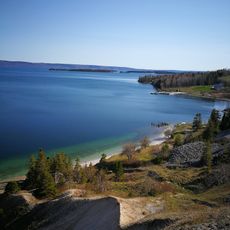
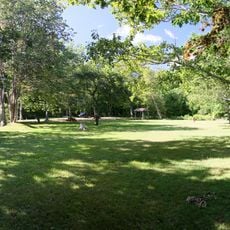
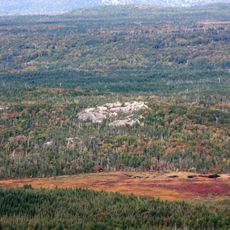
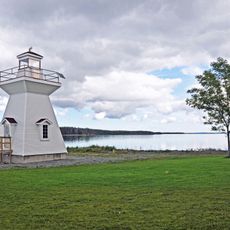
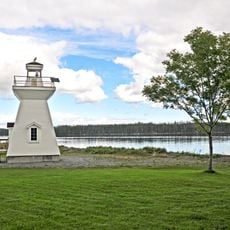
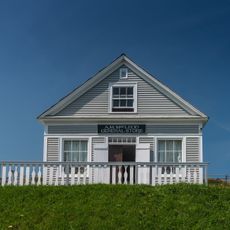
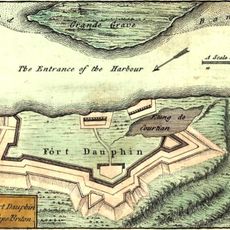
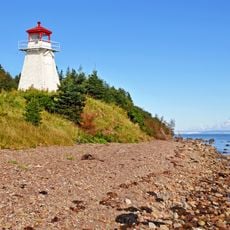
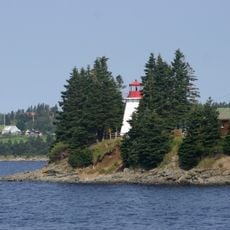
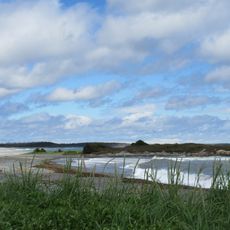
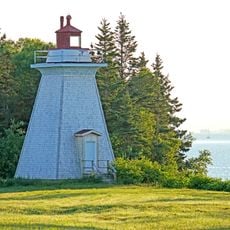
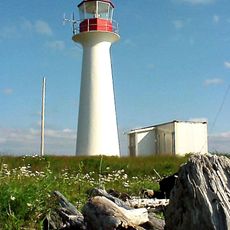
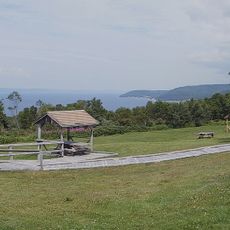
Bras d'Or Lake, Saltwater lake in Cape Breton Island, Canada.
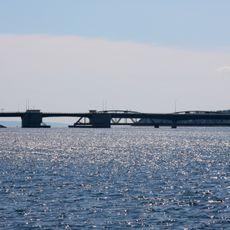
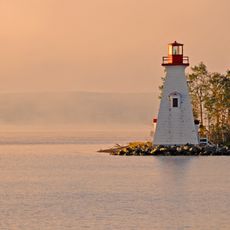
Bras d'Or Lake is an irregular estuary in the centre of Cape Breton Island, Nova Scotia, with a surface area of 1,099 square kilometres. Three arms reach northeast, and the Great Bras d'Or Channel connects the lake to the Atlantic. Its deepest point, 287 metres, lies in St. Andrews Channel.
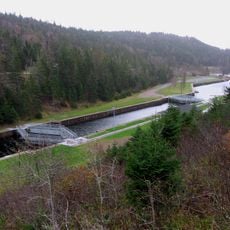
The lake formed about 10,000 years ago as glaciers retreated; land movements later cut it off from the sea before it reconnected roughly 4,500 years ago. Mi'kmaq people already occupied its shores when Europeans arrived, and a French trading post was built in 1650. The St. Peters Canal, dug in the 1860s, gave the southern end a shipping route to the Atlantic.
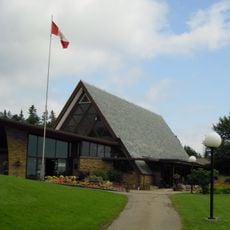
The Mi'kmaq name Pitupaq means "the long salt water." On Chapel Island (Mniku), the Mi'kmaq Grand Council meets, and the island is a Canadian national historic site. A Mi'kmaq cultural centre stands north of Port Hawkesbury. The lake area is also a centre of Nova Scotia's Scottish-descended population.
The lake connects to the Atlantic through the Great and Little Bras d'Or Channels, which pass on either side of Boularderie Island, and through the St. Peters Canal in the south. Tidal range is reduced by these restricted channels, and surface salinity drops to about 20 parts per thousand near river mouths. The lake is usually ice-covered in winter and warms to just over 22 °C in summer.
Alexander Graham Bell conducted experiments with hydrofoil boats on his estate Beinn Bhreagh along the shore. His innovations in boat design were early examples of advanced water technology.
The community of curious travelers
AroundUs brings together thousands of curated places, local tips, and hidden gems, enriched daily by 94,409 contributors worldwide.