Blue Beach, Public beach in Nova Scotia, Canada
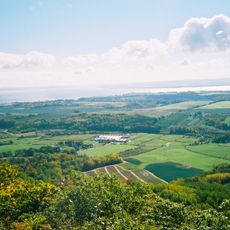
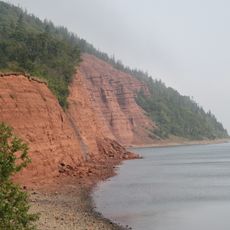
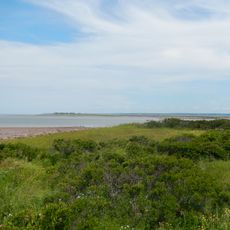
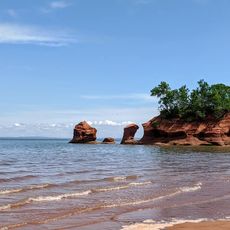
Blue Beach is a public beach on the coast of Nova Scotia, Canada, where a mix of sand and pebbles meets tall rocky cliffs and tidal waters. The shoreline exposes layered rock and sediment that shift in appearance between high and low tide.
In the 1800s, researchers began finding and studying prehistoric specimens in the rock layers along this shore. Those finds drew continued scientific attention and established the site as a reference point for understanding ancient life on the continent.
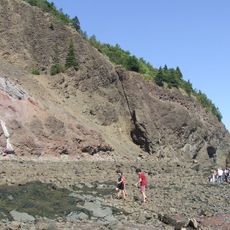
The beach is a popular spot for walkers who come to explore the rocky shoreline and examine what the exposed rock face reveals. At low tide, visitors often crouch down to look closely at patterns and shapes embedded in the stone layers.
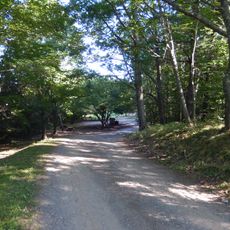
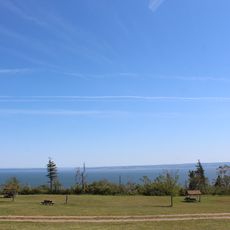
A marked trail leads from the parking area to the shore, with information boards along the way. Visiting at low tide gives better access to the rock layers and makes it easier to walk along the base of the cliffs.
The fossils visible in the rock here date from the Carboniferous period, over 300 million years ago, and many can be seen directly on the surface without any digging. This makes the site one of the few places in North America where specimens of this age are accessible to any ordinary visitor.
The community of curious travelers
AroundUs brings together thousands of curated places, local tips, and hidden gems, enriched daily by 92,703 contributors worldwide.