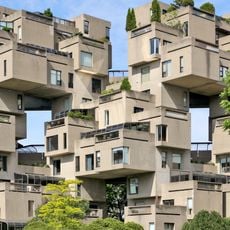
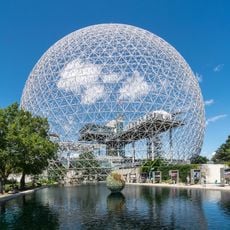
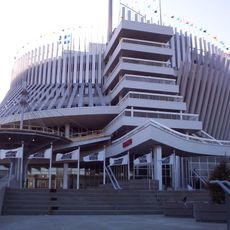
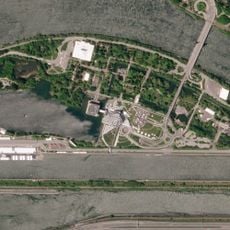
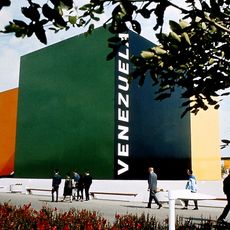
Québec Pavilion, National pavilion at Expo 67 in Montreal, Canada.
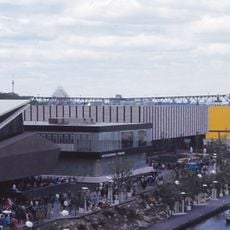
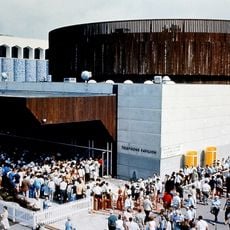
The Quebec Pavilion was a structure with glass walls on Notre Dame Island that reflected daylight and glowed at night. Its interior spanned multiple levels showcasing the province's industrial growth and natural resources through exhibition displays.
Designed by Montreal architects Papineau Gérin-Lajoie Le Blanc and Luc Durand, the pavilion marked 1967 as the year Quebec shifted from traditional to modern industrial identity. This change reflected the rapid economic and cultural transformation the province experienced during the postwar period.
The exhibition displayed thousands of colored steel cubes paired with electronic music by composer Gilles Tremblay to present Quebec's urban transformation. This combination conveyed to visitors a portrait of a modern Quebec conscious of its industrial capabilities.
Entry to the pavilion was via a footbridge followed by large elevators that transported visitors through the exhibition levels. It was best to wear comfortable shoes and allow time to explore the various floors at a leisurely pace.
Architecture critic Ada Louise Huxtable compared the structure to Mies van der Rohe's famous Barcelona Pavilion of 1929 for its refined design and pure exhibition concept. This recognition highlighted the global significance of the design despite its brief existence.
The community of curious travelers
AroundUs brings together thousands of curated places, local tips, and hidden gems, enriched daily by 92,009 contributors worldwide.