Mount Longhu, Sacred Mountain in Yingtan, China
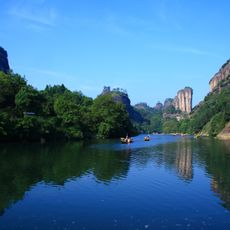
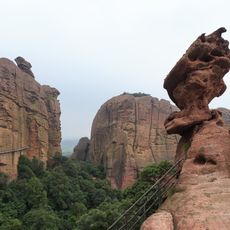
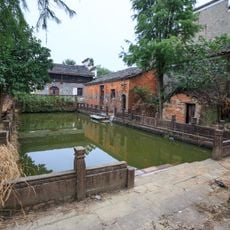
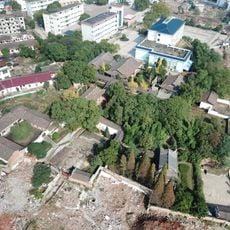
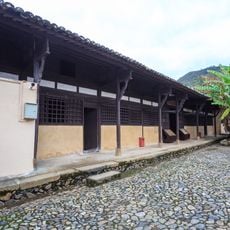
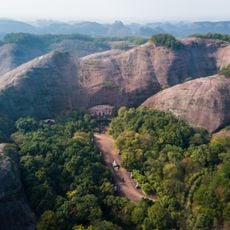
Mount Longhu is a Danxia landform peak forest in Guixi, Yingtan, Jiangxi, whose main peak, Longhu Feng, reaches 247.4 m. Its red sandstone walls, rock pillars and peak clusters show 23 Danxia landform types, from youthful to mature and old stages. Taoist temples such as the Mansion of the Taoist Master stand at the foot of the cliffs in Shangqing town.
In the Eastern Han dynasty, Zhang Daoling, founder of the Five Pecks of Rice movement, made elixirs on Mount Longhu; legend says a dragon and tiger appeared when the elixir was ready, giving the mountain its name. His great-grandson Zhang Sheng settled here between the Three Kingdoms and Western Jin, establishing the hereditary Mansion of the Heavenly Master. Tang and Southern Tang temples followed, and under the Yuan the Heavenly Masters led the Zhengyi school and its rituals across three mountains.
The name comes from a legend that Zhang Daoling made his elixir here and a dragon and tiger appeared. The nearby town of Shangqing, with its Taoist temple, is named at the opening of the novel Outlaws of the Marsh. The Guyue people left hanging coffins in the cliffs, and the Mansion of the Taoist Master keeps a stele inscribed by Zhao Mengfu.
The mountain is best experienced from the river, where bamboo raft tours offer excellent views of the cliffs and temples. Walking paths and steps guide visitors through different areas, with weather conditions being the main factor in planning a visit.
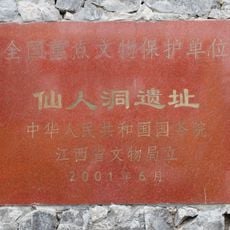
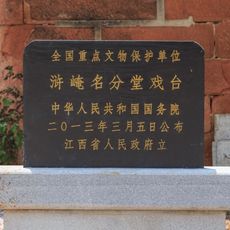
The Xianshuiyan cliff tombs, left by the Guyue people over 2,000 years ago, are listed as a Major Historical and Cultural Site Protected at the National Level. Coffins rest in crevices and caves high on the rock faces above the Luxi River, and visitors can see them from the water below.
The community of curious travelers
AroundUs brings together thousands of curated places, local tips, and hidden gems, enriched daily by 92,893 contributors worldwide.