Beihai Park, Chinese imperial garden in Shichahai Subdistrict, Beijing, China.
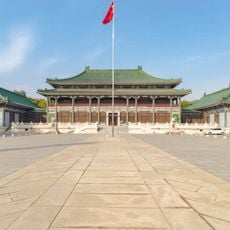
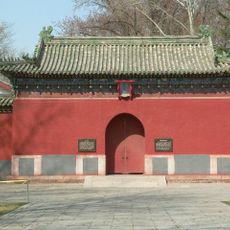
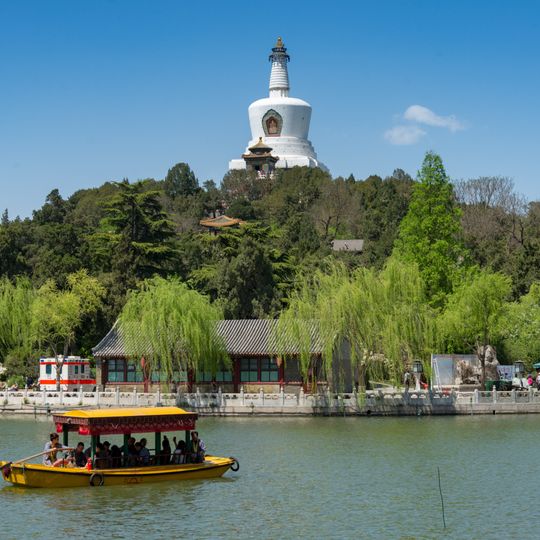
Beihai Park is a Chinese imperial garden in Shichahai Subdistrict, Beijing, covering 69 hectares (170 acres) with large water surfaces, traditional buildings, and structures from several dynasties. The park consists of multiple connected areas with bridges, pavilions, and wooded islands.
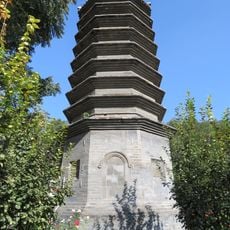
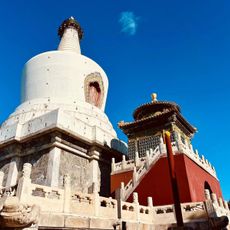
The garden began in 1179, when Emperor Zhangzong of the Jurchen Jin dynasty built a country resort northeast of Zhongdu; Taiye Lake was excavated along the Jinshui River and the Palace of Great Peace rose on Jade Flower Island. Under Kublai Khan the island was redesigned by Liu Bingzhong, Guo Shoujing and Amir al-Din, and the lake was enclosed within Khanbaliq's Imperial City. The Ming divided the lake into the Northern, Central and Southern Seas, and in 1651 the White Dagoba was built on the site of the vanished Palace of Great Peace.
The name Beihai means "Northern Sea", paired with the Central and Southern Seas to its south. On the 25th day of the tenth lunar month, lamps are lit from the top of the White Dagoba down the hillside while lamas perform rites. The Five Dragon Pavilions now host amateur choirs, sign-language groups, dance and folk-music sessions.
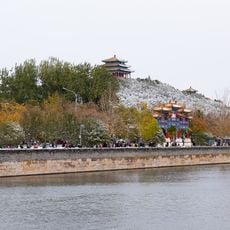
The park lies northwest of the Forbidden City, with the lake's north end joining Shichahai. Jade Flower Island rises 32 m in the lake's centre, reached by the 82 m Yong'an Bridge, a three-arch stone bridge with carved balustrades and green-tiled, red-pillared archways at each end. The park closed from 1971 to 1977 and reopened on 1 March 1978.
The Nine-Dragon Wall from 1402 displays detailed dragon reliefs made from glazed bricks. It is one of only three surviving walls of this type in all of China.
The community of curious travelers
AroundUs brings together thousands of curated places, local tips, and hidden gems, enriched daily by 93,645 contributors worldwide.