Xiaochangliang, Paleolithic archaeological site in Nihewan Basin, China
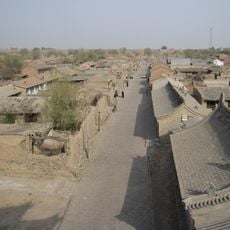
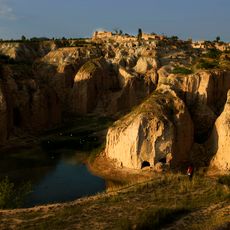
Xiaochangliang is a paleolithic site in the Nihewan Basin of northern Hebei, China, where excavations have uncovered layered sediment deposits containing stone tools and animal bones. The site sits in an open agricultural landscape, and its deep stratigraphic layers make it a reference point for understanding early human presence in East Asia.
The site was first identified in 1923 by a Scottish geologist whose work in the Nihewan Basin drew other researchers to the region in the years that followed. Later excavations throughout the 20th century allowed scientists to date the sediment layers and better understand how the site formed over time.
The stone tools found here were made by striking one rock against another to produce sharp edges, a method you can study up close in museum displays. Scrapers and small cutting tools make up most of the collection, giving a concrete sense of daily tasks carried out at this spot.
Because this is an active excavation site in a rural setting, it is worth arranging a visit in advance with the relevant local authorities. The area is easiest to reach during drier months, as unpaved tracks leading to the site can become difficult after rain.
The layers holding the stone tools show a reversed magnetic polarity, meaning the Earth's magnetic field pointed in the opposite direction when those sediments were laid down. This magnetic signature is what allowed scientists to place the tools at roughly 1.36 million years old, a method that works where standard radiocarbon dating cannot reach.
The community of curious travelers
AroundUs brings together thousands of curated places, local tips, and hidden gems, enriched daily by 92,703 contributors worldwide.