Cuan-Baozi-Stele, Ancient stone monument in Qujing, China.
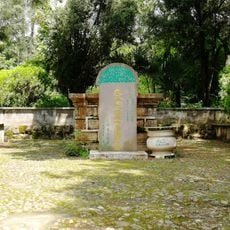
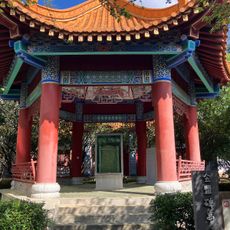
The Cuan-Baozi-Stele is a rectangular bluish sandstone slab, 1.83 m tall, 0.68 m wide and 0.21 m thick, with a rounded top. Its 403 characters are cut in a script between clerical and regular, 13 lines of 7 to 30 characters, headed by a 15-character title and closed by 13 lines of four-character official titles.
The monument was erected in 405 CE during the Eastern Jin period as a grave marker for a Yunnan official. It was discovered in 1778 in a village and placed under national protection in 1961.
The stele is known as "Xiao Cuan" (Small Cuan) to pair with the larger Cuan Longyan Stele; together they are called the "Two Cuan Steles". Its script mixes clerical and regular forms, with many variant and popular characters, and is now read as a decorative stone-carving style of its time rather than a true transitional script.
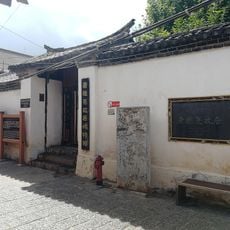
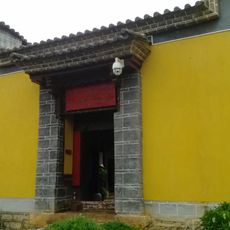
The monument is located on the grounds of a middle school in Qujing and is accessible to visitors as a protected site. It is best to check beforehand about visiting the school grounds.
The stele's date is written as the fourth year of the Dàhēng era, a reign title that never existed: Qujing was too remote to receive news of the change of era, and the era belonged to Huan Xuan's usurping regime, abolished after the Eastern Jin restoration. The inscription also omits Cuan Baozi's year of death and lists no concrete achievements.
The community of curious travelers
AroundUs brings together thousands of curated places, local tips, and hidden gems, enriched daily by 92,784 contributors worldwide.