Jingju Temple, Buddhist temple in Qingyuan District, China
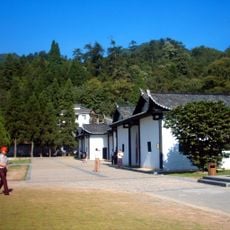
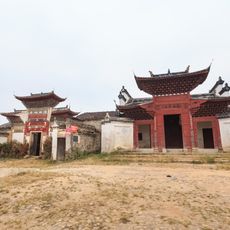
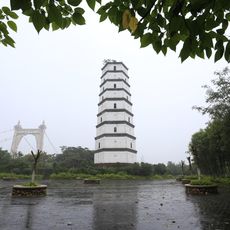
Jingju Temple stands on Mount Qingyuan in Ji'an, Jiangxi. Its buildings follow a central axis: the Shanmen gate, the Hall of Four Heavenly Kings (18 m long, 15 m wide), the Mahavira Hall (25 m by 20 m, 500 m²) with a Sakyamuni statue and Eighteen Arhats, the Pilu Hall (30 m by 23 m, 680 m²) for Vairocana, a Buddhist Texts Library, and the five-storey, five-sided granite Pagoda of the Seventh Patriarch, 3.5 m tall.
Chan master Qingyuan Xingsi founded the temple as Anyin Temple in 705 and taught there for over 27 years. It was destroyed under Emperor Wuzong's anti-Buddhist persecution and rebuilt in 851; Emperor Yingzong honoured the name Anyin in 1066, and Emperor Huizong renamed it Jingju Temple in 1104, when a thousand monks lived there. War ruined it in the late Yuan, master Shigong restored it in 1376, and Wang Yangming lectured here in 1514.
The temple's name comes from Emperor Huizong's 1104 renaming; it had previously been called Anyin Temple. The mountain gate bears three characters, "Qingyuan Shan", written by the Song dynasty general Wen Tianxiang. In 2008 the Jiangxi Buddhist Association held a ceremony here marking 1,300 years since the temple's founding.
The temple stands on Mount Qingyuan in Ji'an's Qingyuan District, with the halls and the Pagoda of the Seventh Patriarch arranged along a central axis from the shanmen to the Buddhist Texts Library. The granite pagoda is 3.5 metres tall with five storeys and five sides, so it can be examined on foot at close range. The site is a National Key Buddhist Temple in Han Chinese Area, listed in 1983.
The complex houses a five-story granite pagoda from the Tang Dynasty with intricate carvings on each level. This Pagoda of the Seventh Patriarch is often overlooked by visitors but reveals the skilled craftsmanship of that period.
The community of curious travelers
AroundUs brings together thousands of curated places, local tips, and hidden gems, enriched daily by 93,879 contributors worldwide.