Mei Ho House, Public housing museum in Sham Shui Po, Hong Kong
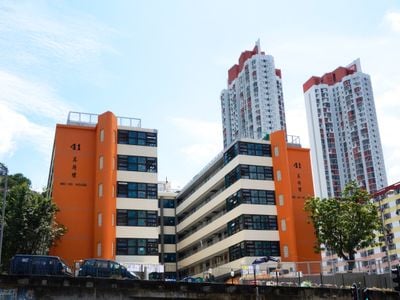
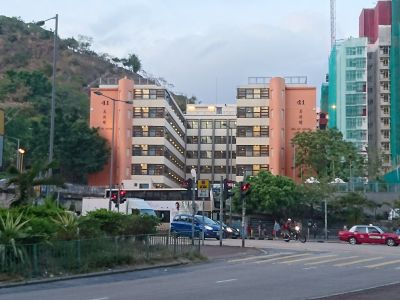
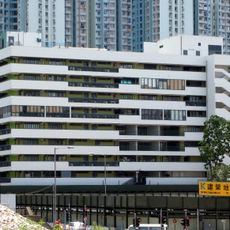
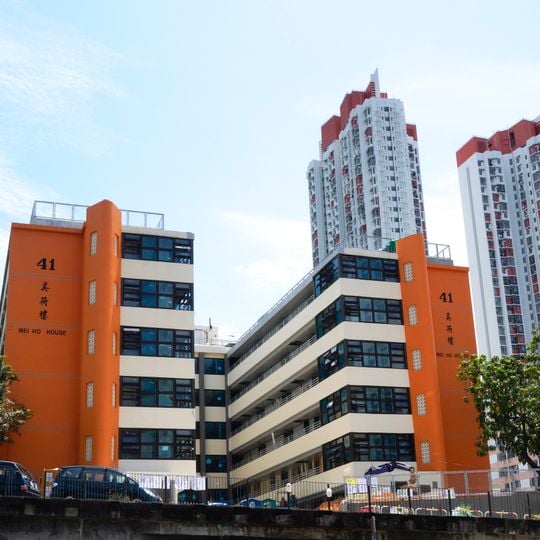
Mei Ho House is a seven-storey Mark I resettlement block in Sham Shui Po, the last of its kind in a single-block layout. Its two orange end walls carry the number 41 and the name in Chinese and English, while cream horizontal bands and rows of dark windows fill the centre. The H-shaped plan has two residential wings joined by communal facilities; the lower floors now hold a museum with four recreated flats, two themed on the 1950s and two on the 1970s, and the upper floors a youth hostel.
After a fire in December 1953 left thousands homeless, the colonial government built a 29-block resettlement estate; Mei Ho House, Block H (later Block 41), was one of eight blocks funded by the United Nations. During the 1956 riots it served as a base for rioters. It was listed as a Grade I historic building in 2005 and reopened in 2013 as a youth hostel and museum.
The residential block displays household setups typical of working families across several decades of Hong Kong public housing and lets visitors grasp how multiple generations shared tight quarters. Original kitchen equipment furniture and everyday objects convey life in the small single-room units often occupied by six or more people.
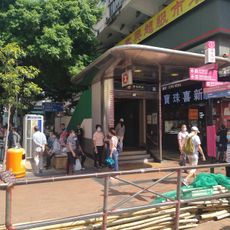
Mei Ho House stands on Berwick Street in Shek Kip Mei, a short walk from Shek Kip Mei MTR station. The hostel and the House of Stories museum share the block: the museum occupies the lower two floors, with four recreated flats and over 1,200 exhibits gathered from 160 former residents. Former residents have served as tour guides. The building is a seven-storey walk-up, so expect stairs rather than lifts.
The complex was originally one of eight identical blocks but it stands alone after the other buildings were demolished. Today guests can stay overnight in part of the building and experience the architecture of early public housing firsthand.
The community of curious travelers
AroundUs brings together thousands of curated places, local tips, and hidden gems, enriched daily by 93,810 contributors worldwide.