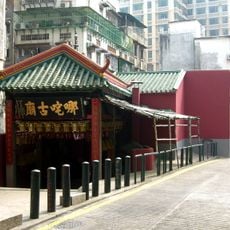
Museum of Sacred Art and Crypt, Religious art museum in Santo António, China.
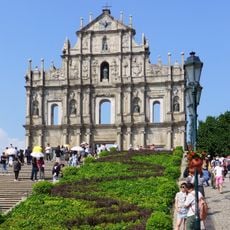
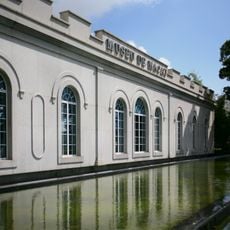
The Museum of Sacred Art and Crypt occupies the site of the main altar of the Church of the Mother of God, behind the façade of the Ruins of St. Paul's. Excavations in the 1990s uncovered the church foundations before the museum opened on 23 October 1996. Its 34 exhibits, drawn from Macau's Catholic Diocese, include paintings, crucifixes, icons and liturgical vessels.
The 1835 fire that destroyed the Church of Saint Paul left only its facade standing; the rear area became a cemetery until the Old Protestant Cemetery outside the city was completed, after which the site lay empty. In the 1990s archaeological excavations uncovered the church foundations, and the museum and crypt were inaugurated on 23 October 1996.
The 34 pieces on show belong to the Catholic Diocese of Macau and come from different churches and convents of the city. Among them are the painting Saint Michael the Archangel, the only oil painting to survive from the College of Saint Paul, a Saint Benedict icon by a Japanese painter, four early canvases on the life of Saint Francis and a Rococo shoulder-borne image of the Virgin. The crypt holds the remains of Japanese and Vietnamese martyrs moved here from Saint Francis Xavier Church in Coloane.
The museum sits directly behind the Ruins of St. Paul's, on the site of the old church's main altar, so it is reached on foot through the Ruins complex in Santo António. It opens daily from 9:00 am to 6:00 pm and admission is free. The crypt and exhibition rooms are compact, making a visit short.
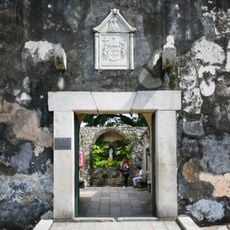
The granite tomb at the crypt's centre is likely the burial place of Alessandro Valignano, the Jesuit founder of the College of the Mother of God, who died in Macau in 1606. The Japanese and Vietnamese martyrs' relics were moved here from St. Francis Xavier Church in Coloane.
The community of curious travelers
AroundUs brings together thousands of curated places, local tips, and hidden gems, enriched daily by 93,863 contributors worldwide.