Ju-Nui-San Lighthouse, Lighthouse in Qingdao, China
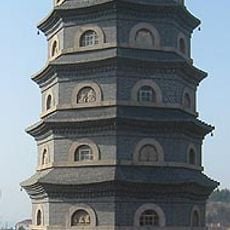
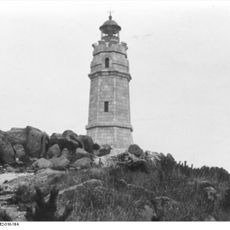
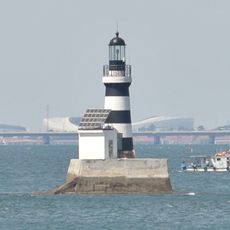
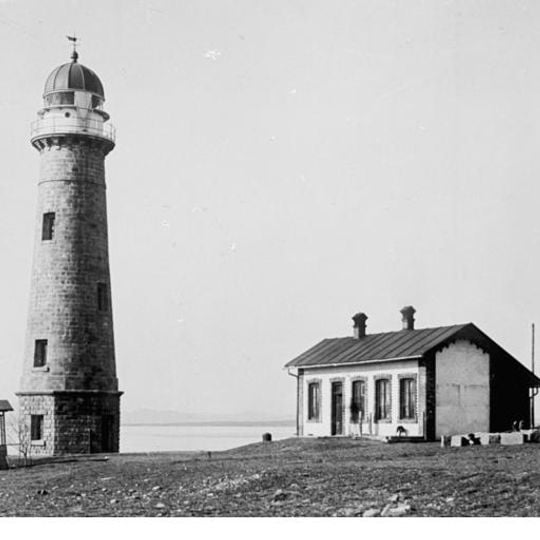
The Ju-Nui-San Lighthouse stands at the southwestern tip of Tuandao in Qingdao's Shinan District. The present 15.4-metre tower, rebuilt in 1919, is an octagonal brick-and-stone structure with three above-ground storeys and a basement. A spiral granite staircase leads to the lantern room, which holds a 1,000-watt bulb and a 750 mm crystal drum lens.
The first lighthouse, built of granite, was completed in 1900 and entered service on 1 December. German engineers blew it up in August 1914 during the siege of Qingdao because it blocked the firing lines of the Tuandao battery. Japan rebuilt it in August 1919 as an octagonal brick-and-stone tower 15.4 m tall, adding a pneumatic fog signal that locals called the "sea cow".
The name Yu-nui-san, also written Ju-nui-san, was a German transliteration of the hill's name with no Chinese characters until the Japanese occupation of 1914 fixed it as 游内山. Locals called the pneumatic fog signal installed in 1919 the "sea cow" for its low tone, sounded 3 seconds every 30 seconds in fog.
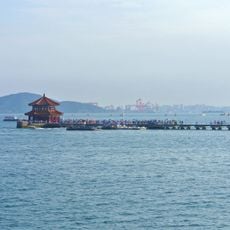
The lighthouse stands at the southwestern tip of Tuandao, a spit connected to the mainland by a filled-in causeway. It is an active aid managed by the Qingdao Aids to Navigation Office of the Tianjin Maritime Safety Administration, so the tower and its compound are not open to the public. The structure can be viewed from the outside; there is no visitor access to the lantern room.
The 1919 tower has an octagonal brick-and-stone shaft, three floors above ground and one below, with a spiral granite staircase up to the lantern room. Its 1,000-watt bulb behind a 750 mm crystal drum lens shows alternating white, red and green beams: white for the main channel, green for the harbour berths, red as a warning of coastal reefs.
The community of curious travelers
AroundUs brings together thousands of curated places, local tips, and hidden gems, enriched daily by 93,086 contributors worldwide.