Puti Temple, Mangshi, Buddhist temple in Mangshi, China.
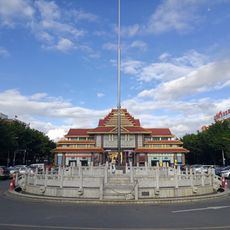
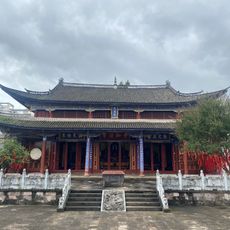
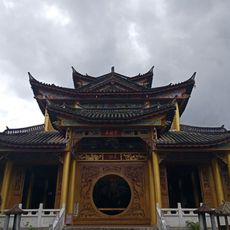
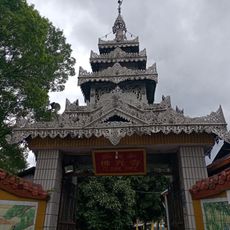
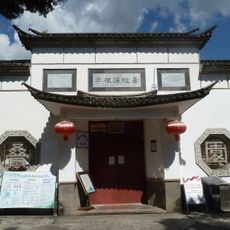
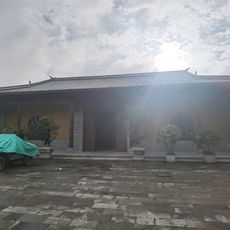
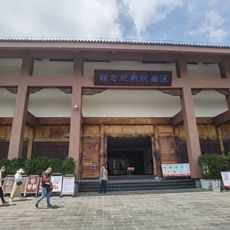
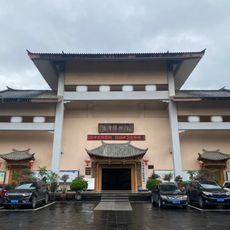
Puti Temple covers 3,125 square metres and has three main structures: the main hall, a sutra library and an ordination pavilion. The main hall, 14 metres high, combines a Dai stilt base with a Han hip-and-gable roof, forming a three-tiered eaves. Its 21-metre-wide facade opens through a sun gate, and inside a 3-metre Sakyamuni statue sits on a lotus throne, flanked by the Dai deities Weishizhong and Langwate Li.
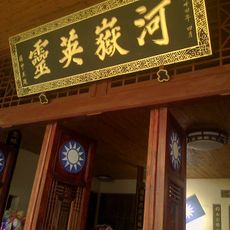
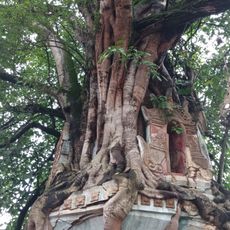
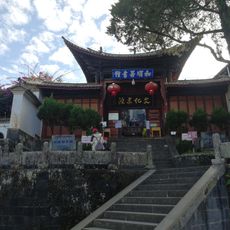
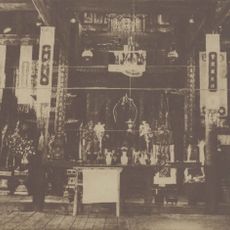
Puti Temple was founded in 1667, the sixth year of the Kangxi reign, and named by Master Dengci after a large bodhi tree at its gate. The Yongzheng Emperor bestowed a plaque reading "佛光普照". Destroyed by war in 1792 and rebuilt in 1809, it burned in 1950 and was rebuilt from 1953 to 1956; the main hall was converted to a stilt style for the 1956 Buddha tooth relic visit. It became a Yunnan provincial cultural relic in 2003.
In Tai Nüa the temple is called Cöng Séhng, "Temple of Precious Stone". It belongs to the Pai Zang school and is its largest monastery, and it houses the Dehong Buddhist Association. In July 1956 the Buddha tooth relic was kept here for a month and more than 240,000 people came to pay respects, an event known as the "Buddha Tooth Grand Fair".
Puti Temple stands on the west side of the middle section of Puti Street, in Menghuan Subdistrict, Mangshi. The grounds cover 3,125 square metres, with 580.85 square metres of building floor area across the main hall, the sutra library and the ordination pavilion. The main hall faces a front corridor with a sun gate at its centre.
The temple's Tai Nüa name, Cöng Séhng, means "Temple of Precious Stone". The Chinese name comes from a bodhi tree that once stood at the gate: master Dengci proposed it in 1940, and the tree was destroyed by Japanese bombing in 1942. The temple is the seat of the Dehong Buddhist Association.
The community of curious travelers
AroundUs brings together thousands of curated places, local tips, and hidden gems, enriched daily by 94,334 contributors worldwide.