Stutensee Palace, Baroque palace in Stutensee, Germany
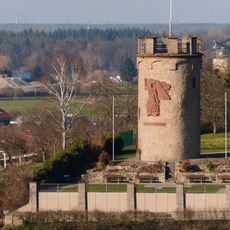
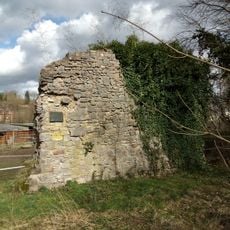
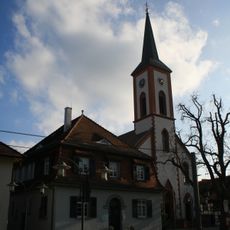
Stutensee Palace is a Baroque former hunting lodge built in 1749 by architect Leopoldo Retti for Margrave Karl Friedrich of Baden, using stone from the ruined Staffort Castle. A square timber-framed building with an octagonal dome, added in 1721, stands between the former stables. The palace garden holds old oaks registered as natural monuments, the oldest estimated at 900 years.
The core of Stutensee Palace is a square half-timbered hunting lodge with an octagonal dome, built in 1721 by Margrave Karl Wilhelm between the stables of the Stutensee stud farm. In 1749 Margrave Karl Friedrich had it rebuilt in Baroque style to plans by Italian architect Leopoldo Retti, using stone from the ruined Staffort castle. From 1891 to 1922 the Karlsruhe local railway to Spöck stopped directly at the palace.
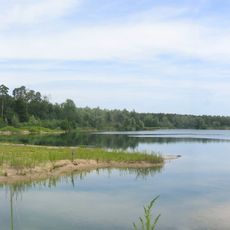
The name Stutensee comes from the margravial stud farm founded in 1652 near the fish ponds. Since 2004 the palace has housed a youth institution of the Karlsruhe district, which also runs the Heinrich-Wetzlar-Haus for young offenders; the grounds are not open to visitors.
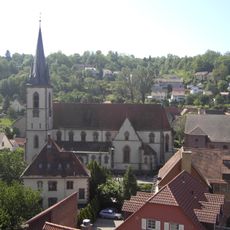
The palace stands at the geographic centre of Stutensee, a town formed in 1975 from Blankenloch, Friedrichstal, Spöck and Staffort. The grounds are occupied by a youth facility of the Karlsruhe district, so the buildings and gardens are not open to visitors; the complex is best viewed from the surrounding streets. The former Karlsruhe local railway to Spöck passed directly by the palace between 1891 and 1922; today's S2 line runs further west without a stop.
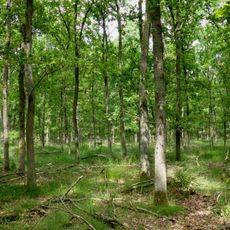
Several oak trees in the palace gardens are protected as natural monuments by law. The oldest tree on the grounds has lived for roughly 900 years, making it one of the oldest living things at this location.
The community of curious travelers
AroundUs brings together thousands of curated places, local tips, and hidden gems, enriched daily by 94,895 contributors worldwide.