Wesel citadel, Military fortress in Wesel, Germany
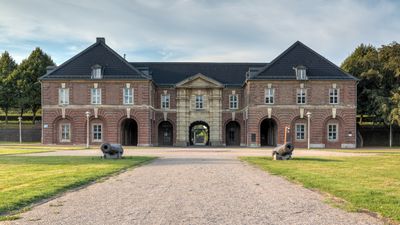
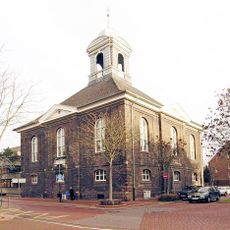
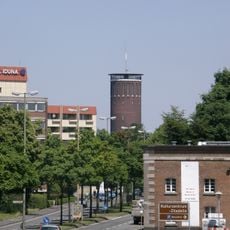
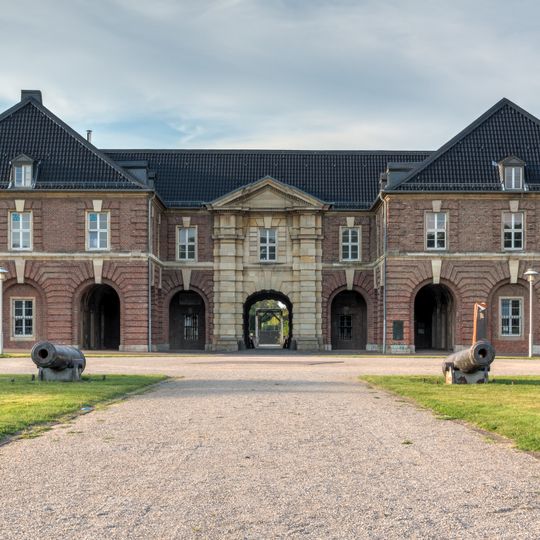
Wesel citadel is a fortification in Wesel with five bastions arranged in a star pattern, encompassing various structures within its fortified walls across about 34 hectares. The complex includes the main gate, barracks, garrison buildings, and several historic structures that reflect the appearance of a classical European fortress.
Johan de Corbin directed construction of this fortification between 1688 and 1722, which became the largest defensive system in the Rhineland. The fortress was strategically important and left a lasting mark on the military architecture of the region.
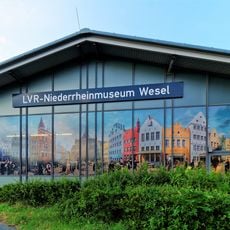
The citadel is a cultural centre housing the LVR-Niederrheinmuseum Wesel in the 1835 Körnermagazin, part of the Städtisches Museum Wesel, the music and art school in Barracks VIII, and the city archive in the 1809 garrison bakery. Since 2002 it has hosted the annual Weseler Kulturnacht in September. The 1727 officers' prison now holds a dance school, a corset workshop and art studios.
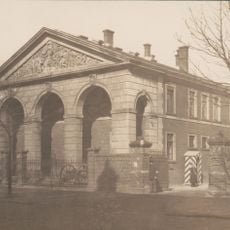
The citadel grounds are open year-round and free to enter; the main gate of 1718 now houses the Schill casemate of the municipal museum. The site is a cultural centre with the music and art school, city archive and LVR Lower Rhine Museum in the surviving buildings. The former fortifications toward the Rhine and Lippe were dismantled in 1919–1920, so only the gate and inner buildings remain.
The main gate, built in 1718 by Jean de Bodt, has a prison cell in its southern wing where eleven of Ferdinand von Schill's officers waited for their trial. The gate now houses the Schill-Kasematte section of the town museum, and a street name is all that recalls the former field gate toward the Rhine and Lippe.
The community of curious travelers
AroundUs brings together thousands of curated places, local tips, and hidden gems, enriched daily by 94,189 contributors worldwide.