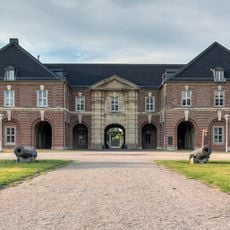
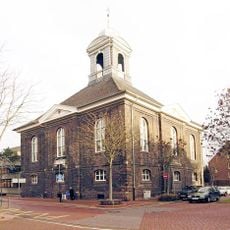
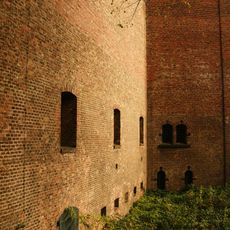
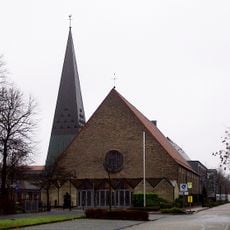
Berliner Tor, Historical gate in Wesel, Germany.
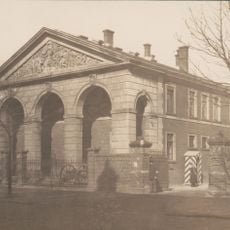
The Berliner Tor is the only surviving gate of Wesel's former fortifications, on the east side of the old town. Fortress and court architect Jean de Bodt built it in 1718–1722 in the Prussian Baroque style, and it was renewed in 1791. It has a single passage; the field side is crowned by a trophy with an allegory of fame and good repute by Guillaume Hulot, a 19th-century copy, and between two Doric columns stand oversized figures of Minerva and Heracles above sandstone medallions of a sleeping lion and the flying Prussian eagle.
The Berliner Tor was built between 1718 and 1722 by the fortress and court architect Jean de Bodt as part of Wesel's fortifications, in the Prussian Baroque style, and was renewed in 1791. It is the only surviving gate of the former fortress. It was badly damaged during the defortification of 1890–1895 and at the end of World War II, which destroyed the town side.
The Berliner Tor is the only surviving city gate in Wesel, which gives it a special place in the daily life of the town. People pass through or by it on foot and by bike as part of their normal routes through the center.
The gate is in the center of Wesel and easy to reach on foot from the train station within a short walk. It sits along an open street and can be viewed freely from the outside at any time.
The gate takes its name from the road to Berlin, the old main route heading east from Wesel. This connection gives the structure a place not just in local history but in the wider story of overland travel across northern Germany.
The community of curious travelers
AroundUs brings together thousands of curated places, local tips, and hidden gems, enriched daily by 93,635 contributors worldwide.