Gut Bossigt, Manor house in Wesel, Germany
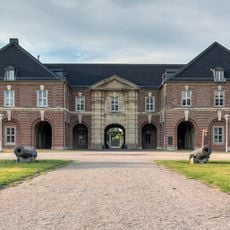
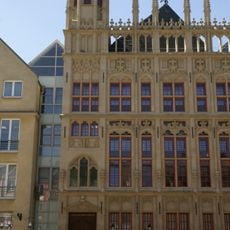
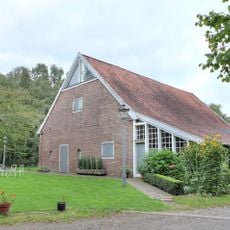
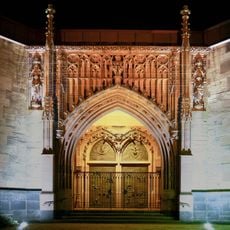
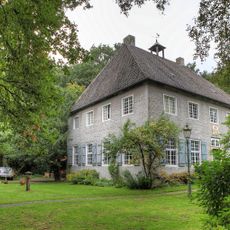
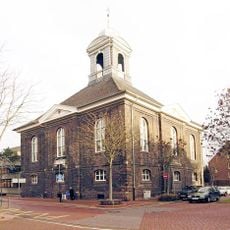
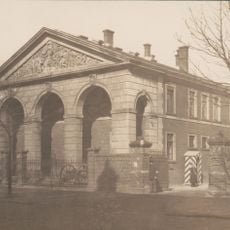
Gut Bossigt is a manor house in Wesel featuring Classical architecture with symmetrical proportions, tall windows, and an ornate stone entrance. The building contains modern conference facilities, technical equipment, and accommodations for events and private functions.
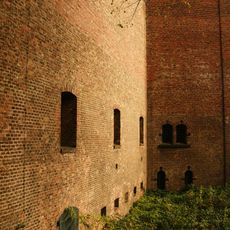
The estate's oldest surviving buildings date from 1767. Johann Conrad Duden, a railway official and distillery owner, received the manor and adjoining structures from his future father-in-law Johann Jacob Monjé. Duden's son Konrad, the lexicographer, was born here on 3 January 1829. Additions followed in 1887 and 1970, and the complex was extensively rebuilt in the 1980s.
The building is known locally as "Schloss Duden" after Konrad Duden, born here on 3 January 1829; his father Johann Conrad Duden, a railway official and distillery owner, received the estate from his father-in-law Johann Jacob Monjé. After decades as a farm, a run-down farmstead, a shelter for war refugees and briefly a restaurant, it now operates as a four-star hotel with seminar rooms.
Gut Bossigt stands in the Lackhausen district of Wesel, at the coordinates 51.68520, 6.63664, and is listed as monument number 115 in Wesel's register of protected buildings. The complex now operates as a hotel with seminar rooms, so the buildings are seen chiefly by guests and seminar participants; others should contact the hotel before planning a look at the exterior.
The building is listed as monument number 115 in Wesel's register of protected buildings. Before its renovation in the 1980s it served at various times as a farm, a run-down agricultural holding, accommodation for war refugees and a restaurant; the German Wikipedia article also records an alleged brothel operation.
The community of curious travelers
AroundUs brings together thousands of curated places, local tips, and hidden gems, enriched daily by 92,776 contributors worldwide.