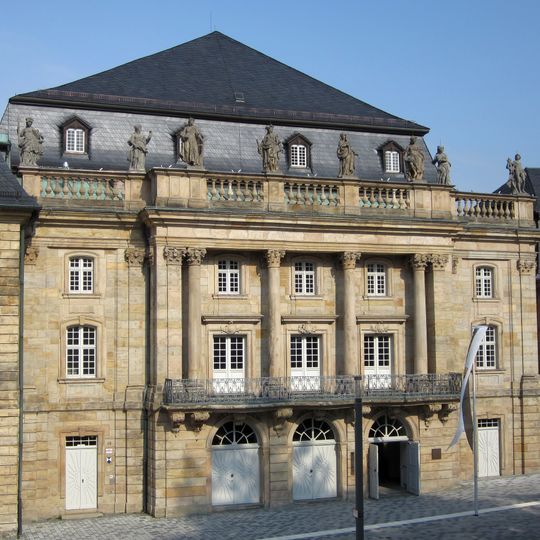
Margravial Opera House

Log in to your account

AroundUs is a community-driven map of interesting places, built by curious explorers like you. It grows with every review, story, and photo you share.
Connect to save your favorite spots, contribute locations, and create personalized routes.
By continuing, you accept our Terms and Conditions and our Privacy Policy
Add to collection
Map
Suggest a change
Share

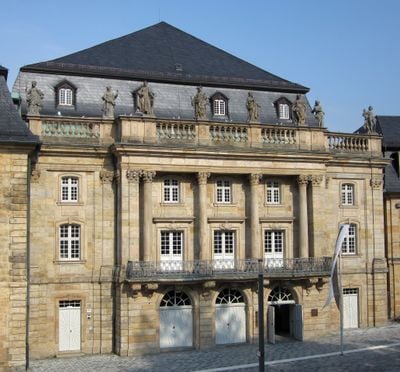
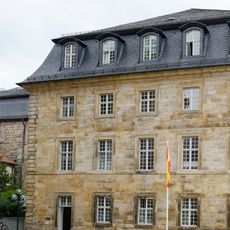
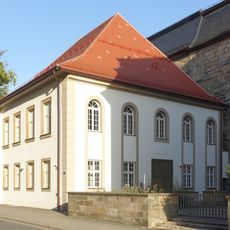
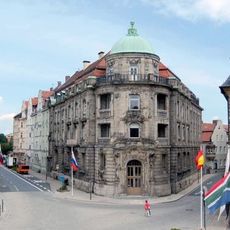
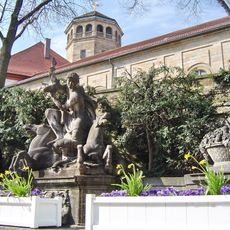
Margravial Opera House, Baroque opera house in Bayreuth, Germany

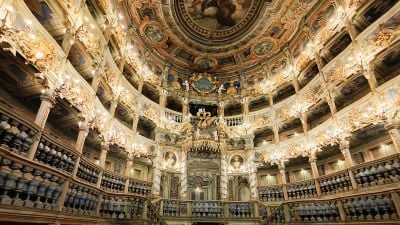
The Margravial Opera House is a baroque opera house in Bayreuth with a special structure: stone outer walls enclose a wooden interior with multiple tiers arranged in Italian style. The spaces feel intimate and refined, with detailed craftsmanship visible throughout.

The building was commissioned in 1744 by Margrave Wilhelmine and Friedrich III of Brandenburg-Bayreuth. Its opening in 1748, celebrated during their daughter's wedding, became a significant moment for the city's cultural importance.

The building shows how important music and theater were to court life in the 18th century. You can still see the stage machinery today, which reveals the technical skills of that era.

The house is open daily from April through September and welcomes visitors to explore, with guided tours available in German and English for those seeking deeper knowledge. Plan time to discover the details of the interior spaces, and note that visiting in the morning or early afternoon works best.

One striking feature is that much of the interior – canvas decorations and wooden elements – was not made on site. These pieces were produced elsewhere and then assembled during initial construction, showing an unusual approach to building at that time.

Location: Bayreuth

Inception: 1744

Architects: Joseph Saint-Pierre

Official opening: 1748

Architectural style: baroque architecture

Accessibility: Wheelchair limited access

Fee: Yes

Address: Opernstraße 14, 95444 Bayreuth

Opening Hours: April-September Monday-Sunday 09:00-18:00; October-March Monday-Sunday 10:00-16:00; December 24-25,December 31,January 1: off

Phone: +499217596922

Website: https://bayreuth-wilhelmine.de/englisch/opera

GPS coordinates: 49.94434,11.57866

Latest update: December 6, 2025 16:01

Photos
Historic sites and nature areas in Bavaria

Bavaria combines medieval castles, baroque churches, and natural areas into one region. Palaces sit in forests, old monasteries stand near rivers, and mountain lakes dot the Alps. Cities preserve their medieval buildings and streets while the landscape spreads across mountains, lakes, and hiking trails that follow historical routes. Visitors encounter places like Burghausen with its long fortress, the Wies Church with its ornate interior, and Herrenchiemsee Palace built on an island in the Chiemsee lake. Bamberg's old town shows half-timbered houses and waterways, while Regensburg holds one of Germany's largest medieval centers with stone buildings from centuries past. Nature lovers can explore the Königssee and Weißensee, walk through the Partnach Gorge, or take the cable car up Zugspitze. The region draws visitors to monasteries like Weltenburg and Ottobeuren, which display remarkable artwork and decoration, and to palaces such as Linderhof where King Ludwig II spent time. Nature paths like the Baumwipfelpfad Steigerwald or walks through Franconian Switzerland show the region's green character. Thermal baths in Erding offer warmth and relaxation, while villages like Oberammergau and Mittenwald display painted house fronts that catch the eye.

Historic opera halls: architecture, history and musical heritage

The large opera halls of the nineteenth century tell the story of classical music through their walls. Built in the most important cities in the world, these buildings show many styles: some have simple neoclassical shapes, others have the decoration of neo-baroque, and a few embrace modern elements. Each hall shows how people thought about sound and performance at its time. From the Teatro San Carlo in Naples with its six tiers of boxes and ceiling paintings to the Paris Opera with its big marble staircase, these theaters form a special collection of architecture. From New York to Moscow, from Vienna to Milan, these halls are still alive places. The Scala in Milan has kept its horseshoe shape since the early days of the nineteenth century. The Metropolitan Opera in New York has a modern look with five layers of balconies. The Bolshoi in Moscow, recently fixed up, still impresses with its Greek-style columns and its bronze chariot. In Vienna, the State Opera reopened after the Second World War, in 1955. In London, Buenos Aires, Amsterdam, and Venice, these theaters still play an important part in music life, welcoming the same passions as before. You can walk through these buildings, climb their stairs, sit under their decorated ceilings, and see how each room has its own special feel. Some rooms feel warm because of their golds and velvets. Others seem very clean and simple. Every hall has its own sound, its own shape, and its story carved in stone.

Reviews

Visited this place? Tap the stars to rate it and share your experience / photos with the community! Try now! You can cancel it anytime.

« Margravial Opera House - Baroque opera house in Bayreuth, Germany » is provided by Around Us (aroundus.com). Images and texts are derived from Wikimedia project under a Creative Commons license. You are allowed to copy, distribute, and modify copies of this page, under the conditions set by the license, as long as this note is clearly visible.

Discover hidden gems everywhere you go!

From secret cafés to breathtaking viewpoints, skip the crowded tourist spots and find places that match your style. Our app makes it easy with voice search, smart filtering, route optimization, and insider tips from travelers worldwide. Download now for the complete mobile experience.
Around Us App Screenshot

A unique approach to discovering new places

Le Figaro

All the places worth exploring

France Info

A tailor-made excursion in just a few clicks

20 Minutes