Platz der Luftbrücke, Square and airlift memorial in Tempelhof, Berlin, Germany
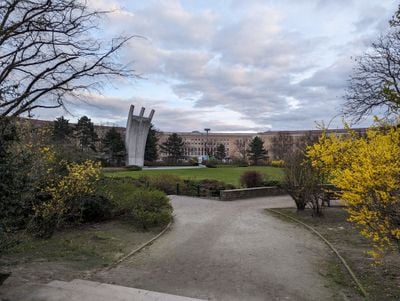
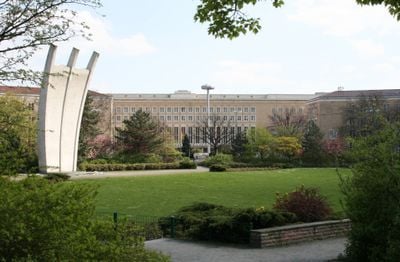
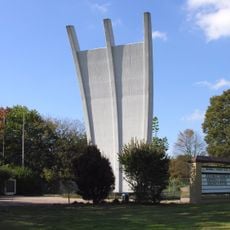
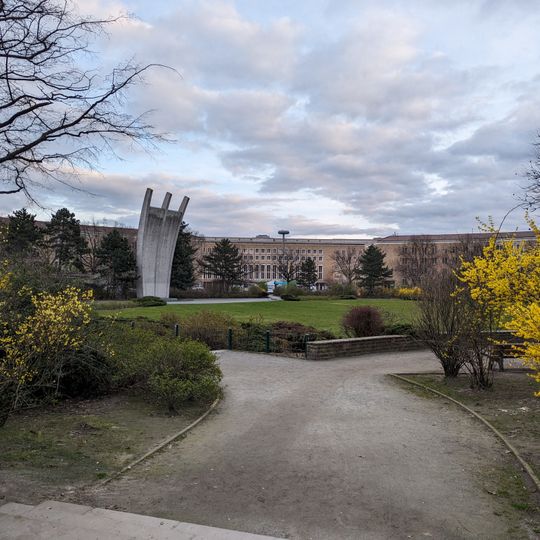
Platz der Luftbrücke is a square on the border of Tempelhof and Kreuzberg, named after the 1948/49 Berlin Airlift. On its east side stand the former airport departure building and administration building designed by Ernst Sagebiel. In front of the airport entrance is the Berlin Airlift Monument, a tall concrete monument with three upward-curving prongs of unequal length, erected in 1951.
The square was named on 25 June 1949 by mayor Ernst Reuter after the Berlin Airlift of 1948/49, when Tempelhof was the main airfield supplying West Berlin. Sagebiel's unrealised plan had envisaged a square ringed by uniform buildings, with a promenade and waterfalls descending from the Kreuzberg; in the late 1930s the site was still a grassy half-circle. The landscaping with sunken lawn, trees and a low hedge framing the monument dates from 1949 and has been altered several times since the 1950s.
Berliners nicknamed the 1951 monument the Hungerkralle, or hunger claw, because its three arcs point west toward the three air corridors that supplied the city. Its base lists the names and ranks of the 78 people killed in accidents during the blockade. The sculptor Eduard Ludwig won the competition for the design.
The square sits at a major traffic junction where several important roads meet and intersect. Visitors should be aware that the area has heavy vehicle flow and it is best to cross streets with care.
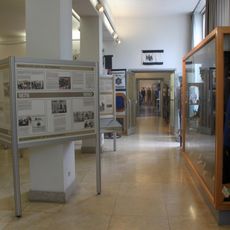
The eagle head near the departure building is all that survives of a 4.5-metre eagle by sculptor Walter Lemcke that stood on the roof from 1940. It held a globe, not a swastika, echoing plans for the Great Hall of Germania. Removed in 1962 for radar equipment and sent to West Point, it was returned by the US Air Force and displayed as Eagle Square since August 1985.
The community of curious travelers
AroundUs brings together thousands of curated places, local tips, and hidden gems, enriched daily by 92,790 contributors worldwide.