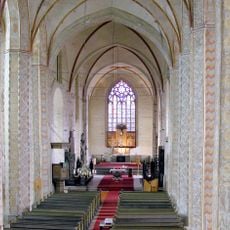
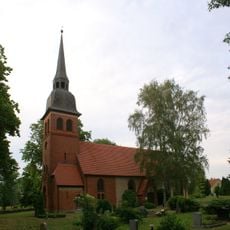
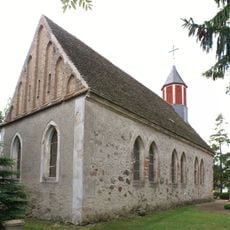
Stolpe Abbey, Romanesque monastery ruins in Stolpe an der Peene, Germany
Stolpe Abbey is the ruined remains of a medieval Benedictine monastery on the southern bank of the Peene River between Gützkow and Anklam. The site displays romanesque architectural elements and the layout of a religious community that once served as a regional center.
Ratibor I, Duke of Pomerania, founded the abbey on 3 May 1153 in memory of his brother Wartislaw I, who was killed near the site. Benedictine monks from Berge Abbey near Magdeburg formed the first community. In 1304 the abbey adopted the Cistercian rule and became a daughter house of Pforta Abbey; it was dissolved in 1534 during the Reformation, and the Thirty Years' War left the buildings in ruins.
The abbey's name comes from the village of Stolpe an der Peene, where it was founded; the site lies on the river's southern bank between Gützkow and Anklam. Its church held patronage rights over parishes such as Liepen, Neuenkirchen, Rathebur, Wusseken and Ziethen, with the filial churches of Rubkow and Bünzow. Visitors today see the remains of the western ground floor of the abbey church.
The ruins are freely accessible outdoors and can be visited at any time, with interpretative panels on site explaining the structures. Visitors should expect uneven ground and wear appropriate footwear, especially in wet weather.
In 1305 Stolpe was made mother house of Kärkna (Falkenau) in Livonia, which was sold that same year to the Teutonic Order; its monks moved to Padise in Estonia, founded in 1310 and placed under Stolpe in 1319. The abbey also held patronage rights over parish churches such as Ziethen (1237), Liepen and Wusseken (1296).
The community of curious travelers
AroundUs brings together thousands of curated places, local tips, and hidden gems, enriched daily by 94,374 contributors worldwide.