Marienmünster abbey, Benedictine monastery in Marienmünster, North Rhine-Westphalia, Germany.
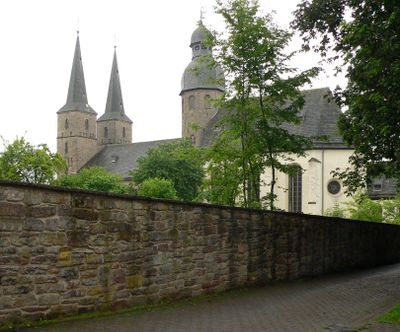
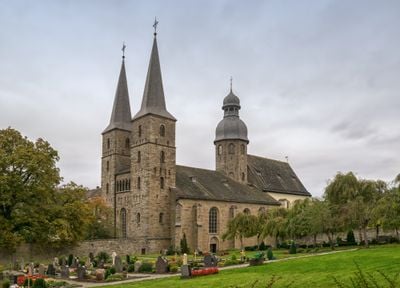
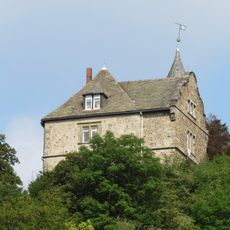
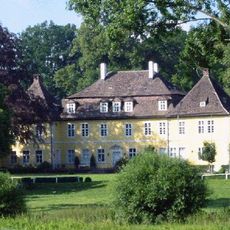
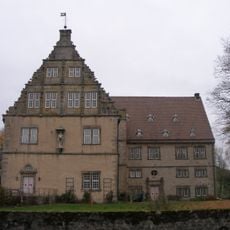
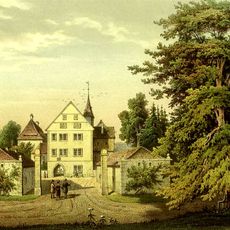
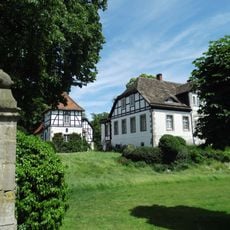
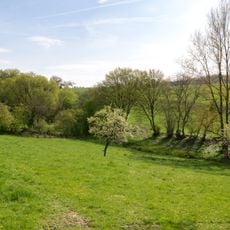
Marienmünster abbey is a monastery complex set in the landscape of Westphalia with a church building, cloister, and residential quarters arranged around courtyards. The structures combine different architectural layers from various periods, showing how the site has evolved over centuries.
Widekind I of Schwalenberg and his wife Lutrud founded the Benedictine abbey in 1128 as an act of penance, on the advice of Bishop Bernhard I of Oesede. Twelve monks from Corvey arrived, with Gerhard as first abbot. Hessian and Swedish troops destroyed the church between 1641 and 1646; Abbot Ambrosius Langen had it rebuilt from 1661. The monastery was dissolved on 31 March 1803, and the last five Passionist priests left in September 2014.
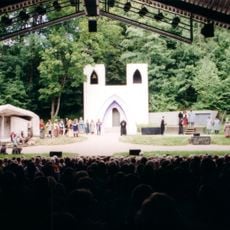
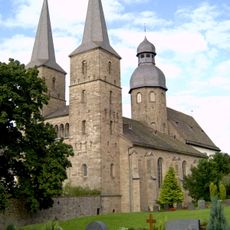
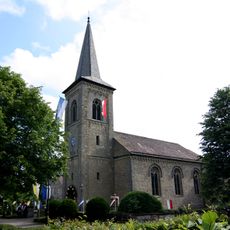
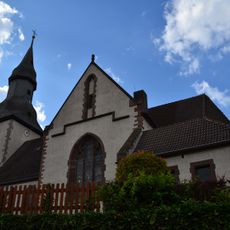
The abbey is still a recognised pilgrimage site because of the image of the Sorrowful Mother of God. The former abbey church, dedicated in 1128 to the Virgin Mary, the Apostle James the Elder and Saint Christopher, now serves as the parish church of St. James. Since 2007 the converted sheep barn and granaries host concerts and events.
The former abbey church now serves as the parish church of St. James and is open to visitors; the surrounding monastic buildings are not open to the public. Since 2007 the converted barns at the Klosterhof host concerts and events, and a visitor centre opened in 2015 in front of the monastery wall. No resident monks live here today.
The abbey church began as a Romanesque basilica after 1150; only the nave, one aisle and the lower part of the octagonal crossing tower survive from that phase. From 1661 the master builder Ludwig Baer converted the nave into a hall church, and in 1679 the crossing was raised and given its Baroque dome, the round tower visible today.
The community of curious travelers
AroundUs brings together thousands of curated places, local tips, and hidden gems, enriched daily by 94,255 contributors worldwide.