Münzkabinett, Numismatic museum in Dresden Castle, Germany
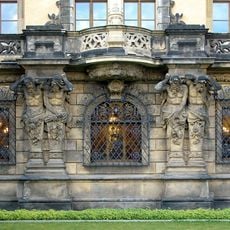
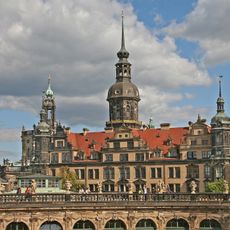
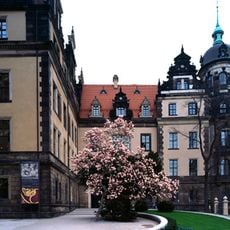
The Münzkabinett occupies former princely living rooms in the Georgenbau of Dresden Castle. Its roughly 3,300 exhibited pieces are arranged in four rooms: mining and minting in Saxony, the cosmos of money, money in everyday aspects, and medals and orders. The oldest object is an electrum coin from Lydia struck under King Alyattes II, more than 2,500 years old.
The collection traces its origin to Duke George the Bearded, in whose account book the medallist Hans Schwarz is named in 1518. Elector Augustus expanded it by hiring medallists such as Valentin Maler and Tobias Wolff, and Augustus the Strong bought the von Birckholtz collection in 1716 and antique coins from the estate of Duke Moritz Wilhelm of Saxe-Zeitz in 1718. In 1831 it passed to state administration, and in 1877 it returned to Dresden Castle.
The collection reveals how people across centuries created money and commemorative medals, expressing economic values and artistic skill through metal. Visitors can observe how coins and badges served as markers of power, commerce, and daily life in different periods.
The permanent exhibition occupies former princely living rooms in the Georgenbau of Dresden Castle, arranged in four rooms: mining and minting in Saxony, the cosmos of money, money in everyday contexts, and medals and orders. A library of some 30,000 volumes and a study room are open to the public for research.
The museum holds the legal authority to record and acquire all coin discoveries made within Saxon territory, giving it an ongoing stream of new finds. This role makes it a vital resource for understanding regional trade patterns and archaeological developments.
The community of curious travelers
AroundUs brings together thousands of curated places, local tips, and hidden gems, enriched daily by 94,461 contributors worldwide.