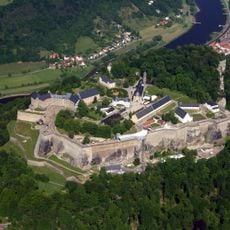
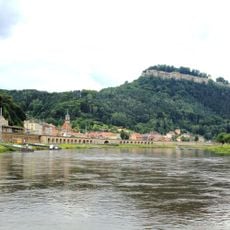
Pfaffenstein, Mountain summit in Sächsische Schweiz-Osterzgebirge, Germany
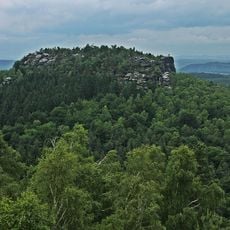
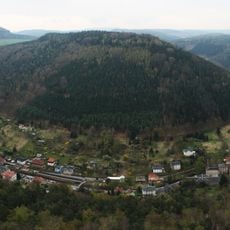
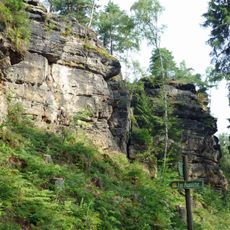
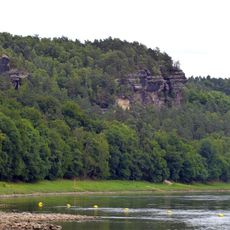
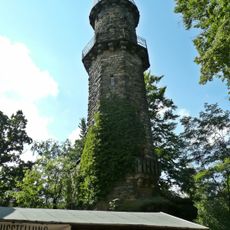
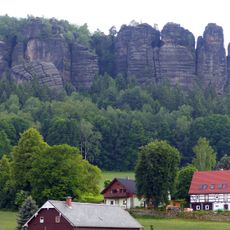
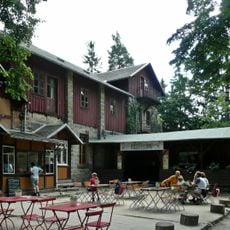
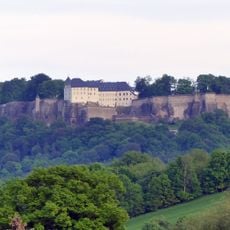
Pfaffenstein is a 434.6-metre table hill in the Elbe Sandstone Mountains near Königstein, with a plateau about one kilometre long and up to 400 metres wide. Its rim is formed by fissured sandstone crags, and the 43-metre Barbarine needle stands at the southern tip. The plateau holds an inn, an observation tower and several viewpoints.
The plateau was settled about 3,000 years ago by the Lusatian Culture; digs between 1896 and 1912 near today's inn found flat stone axes, clay vessels, a grinding stone and a hearth. A 200-metre Bronze Age rampart by the Bequemer Aufstieg guarded the only way up. The hill is first recorded in 1548, when Pfaffendorf farmers held grazing and wood rights, and in 1838 a large rock face on the east side collapsed, leaving the bright Weiße Wand.
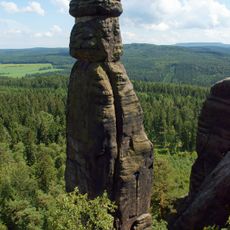
The old name Jungfernstein, "Virgin Rock", comes from the legend of the Barbarine: a mother sent her daughter to church on Sundays, caught her picking bilberries on the Pfaffenstein instead, and cursed her to stone. The 43-metre pinnacle stands at the southern tip of the plateau and is the symbol of the hill.
The plateau is reached on foot; the Bequemer Aufstieg is the historic sole approach, guarded by the Bronze Age rampart. The summit plateau stretches about one kilometre north to south and up to 400 metres across, with the highest point in the south. The Barbarine stands at the southern tip, above the climbing sector; it has been closed to climbers since 1975.
The Barbarine is not just a rock: its old name Jungfernstein comes from the legend that a mother cursed her daughter, caught picking bilberries instead of going to church, and turned her to stone. The 43-metre pinnacle has been off-limits to climbers since 1975 because of serious erosion damage.
The community of curious travelers
AroundUs brings together thousands of curated places, local tips, and hidden gems, enriched daily by 94,642 contributors worldwide.