Cloppenburg Museum Village, Open-air museum in Cloppenburg, Germany
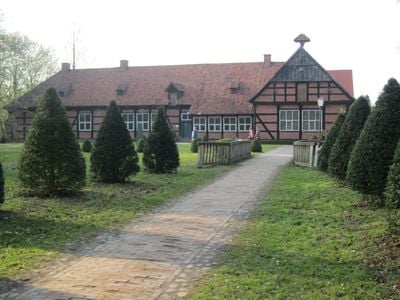
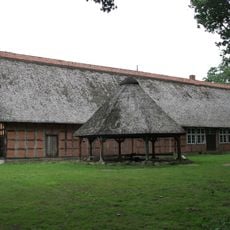
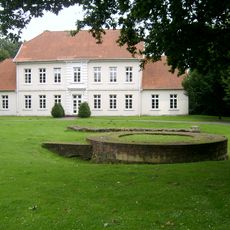
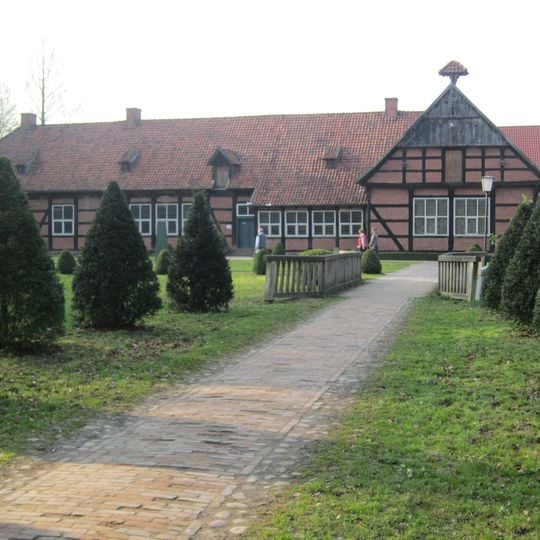
The Cloppenburg Museum Village is an open-air museum with more than 50 authentic historical buildings spread across large grounds. The buildings come from different time periods and show the rural architecture of the Lower Saxony region.
The Heimatmuseum für das Oldenburger Münsterland was founded in Cloppenburg in 1922, and its director Heinrich Ottenjann developed the open-air museum, which opened on Ascension Day 1936. On 13 April 1945 artillery fire destroyed six houses, including the Quatmannshof, rebuilt faithfully by 1962. Helmut Ottenjann led from 1961, Uwe Meiners from 1996 to 2018, and Torsten W. Müller from 2022.
The buildings show how people lived and worked in rural areas long ago, with farmhouses, workshops, and a chapel from the 1600s. Visitors can see the craftsmanship and building materials that were used across generations.
The grounds are large and designed for walking, so wear comfortable shoes and allow time to explore different areas at your own pace. There are shaded areas under trees and covered paths that offer shelter if the weather changes.
The museum's collection holds the Bissel fragment of the Oldenburg meteorite, a 4.84 kg stone that fell in 1930 onto Bissel (parish of Großenkneten) and Beverbruch (parish of Garrel). It is not part of the open-air displays but kept in the collection, so visitors should ask staff rather than expect to find it in a building.
The community of curious travelers
AroundUs brings together thousands of curated places, local tips, and hidden gems, enriched daily by 93,467 contributors worldwide.