Wehlburg, Building group in Museumsdorf Cloppenburg, Germany
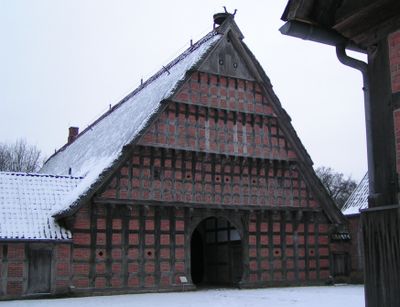
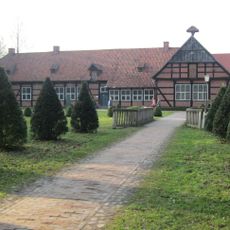
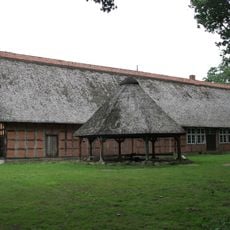
Wehlburg is a farmstead with a half-timbered residence and attached agricultural buildings arranged around a central courtyard, typical of 18th-century rural settlements. The complex shows a clear separation between living quarters and animal housing, with all structures designed for practical farm operations.
The farmstead was built in 1750 in the Osnabrück region as a typical rural settlement. It was dismantled in the 20th century and reconstructed at Museumsdorf Cloppenburg between 1972 and 1975, where it now stands as evidence of regional building traditions.
The name Wehlburg suggests a fortified or prestigious farmstead, reflecting aspirations for prosperity and security. The way the half-timbered main structure connects to the agricultural spaces shows how a single family organized work, storage, and daily life in one coordinated complex.
The building sits within a larger open-air museum, so visitors should allow time to explore the surrounding structures at their own pace. It helps to start with a museum map to navigate the various farm areas and connect the different buildings meaningfully.
The farmstead once housed seasonal workers who exchanged labor for lodging during harvest time. This system allowed farmers to bring in extra help when needed without maintaining a permanent workforce year-round.
The community of curious travelers
AroundUs brings together thousands of curated places, local tips, and hidden gems, enriched daily by 60,000 contributors worldwide.