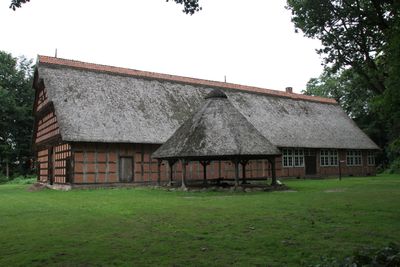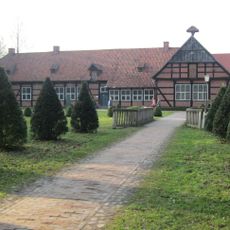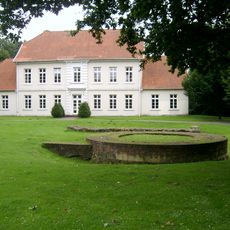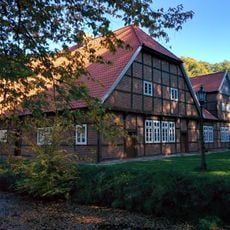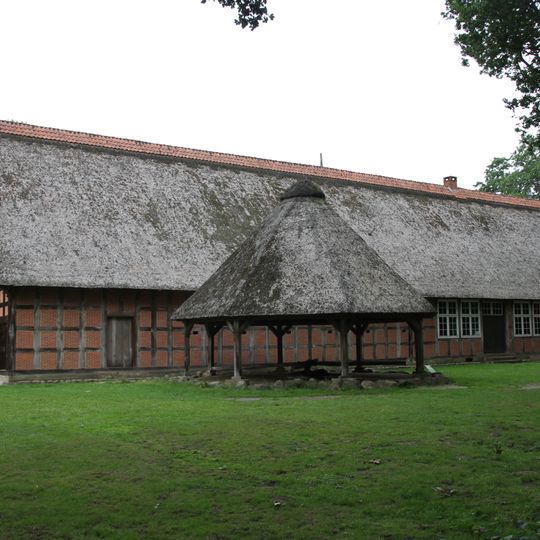
Quatmannshof, Historical farmhouse at Museum Village Cloppenburg, Germany.
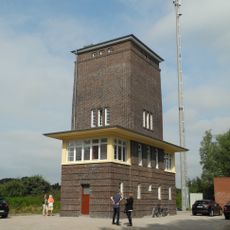
The Quatmannshof is a farmhouse with timber frame and red brick walls that stretches about 45 meters long with three protruding levels on its front gable. The property includes several functional buildings such as a grain barn, cattle barn, carriage house, bakery, sheep stable, and threshing tower from different periods.
The farmhouse was built between 1803 and 1806 in the village of Elsten and then relocated to the Museum Village Cloppenburg between 1935 and 1936. After fire damage in 1962, it was reconstructed and reassembled.
The central hearth room served as the gathering place where farmers and servants shared meals and stayed warm together. This space was the heart of daily life and stood apart from the cold stable areas.
The site is best explored on foot, with the various buildings easily accessible and forming a natural route around the property. Visitors should allow several hours to thoroughly explore all areas and understand the different functions of each building.
Farmer Georg Quatmann documented the construction in his diary, noting work disruptions and the final frame-raising ceremony on June 5, 1805. These detailed personal records offer insight into daily life and the challenges of building a large farmhouse during this period.
The community of curious travelers
AroundUs brings together thousands of curated places, local tips, and hidden gems, enriched daily by 60,000 contributors worldwide.