Hochdorf Chieftain's Grave, Iron Age burial site in Eberdingen, Germany.
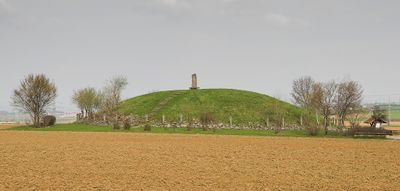
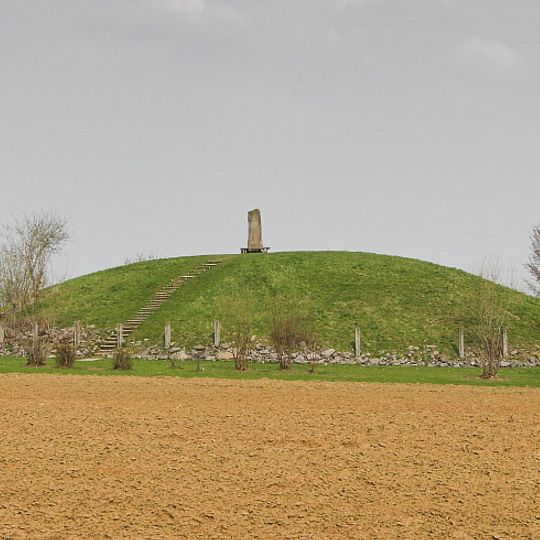
The Hochdorf Chieftain's Grave is a grass-covered mound about 6 m high and 60 m in diameter, rebuilt after excavation, with a tall stone slab on top and steps up its left side. A ring of rough stones and short wooden posts surrounds the base. The nearby Keltenmuseum displays a replica of the 4.70 m × 4.70 m oak burial chamber and the original skeleton.
The site was built around 530 BCE during the Hallstatt period and was discovered in 1968. Excavation work that followed revealed rare finds from this early period of Central Europe.
The burial reveals how craftsmanship and artistic skill defined Celtic elite status, particularly in bronze work and decorated objects. The items show the importance placed on displaying wealth and power through fine goods.
The reconstructed mound is accessible and gives a sense of how large the original burial was. The adjacent museum explains the finds and shows how people lived during Iron Age times.
The dead man wore shoes made from gilded metal and the cauldron was too large for everyday use – such objects were likely made for special occasions only. This shows that display and abundance were central to power and status.
The community of curious travelers
AroundUs brings together thousands of curated places, local tips, and hidden gems, enriched daily by 92,835 contributors worldwide.