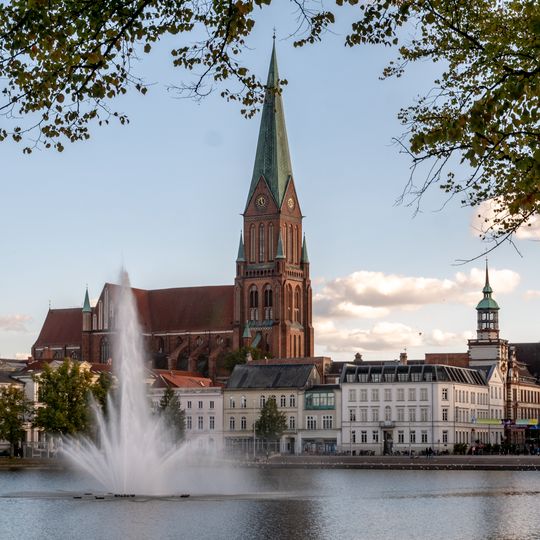
Schwerin Cathedral, Lutheran cathedral in Schwerin, Germany
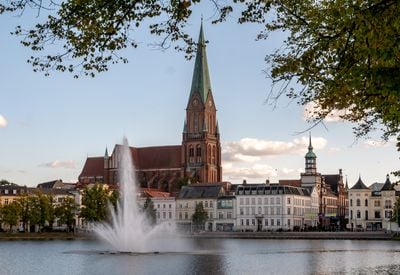
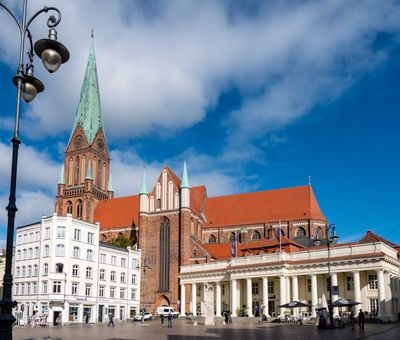
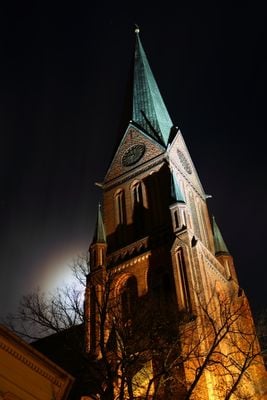
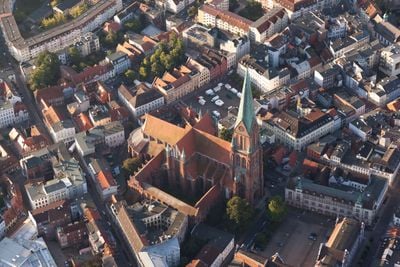
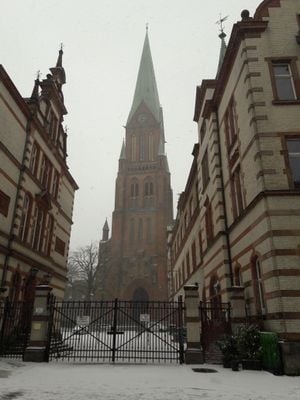
Schwerin Cathedral is a three-aisled Brick Gothic basilica, 105 metres long with vaults 26.5 metres high. Its neo-Gothic west tower, added 1889–1893 and funded by Arthur von Bernstorff, reaches 117.5 metres. The east choir closes in five sides of an octagon, with five chapels whose continuous lean-to roof replaced separate chapel roofs. A white trefoil frieze runs beneath the gables and eaves.
The present cathedral was begun around 1270, after Count Henry of Schwerin brought a reliquary of the Holy Blood in 1222 and the Romanesque predecessor became too small for pilgrims. The choir was finished in 1327, the nave vaults in 1416. The neo-Gothic west tower was added in 1889–1893.
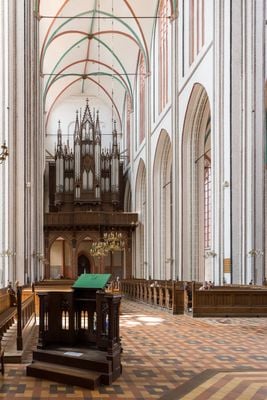
The cathedral takes its name from its role as a bishop's seat and shapes how the city is perceived. Visitors notice the restored medieval wall paintings and the large organ with many pipes that fills the interior space.
Visitors can enter the cathedral daily to explore the architecture or climb the winding stairs to the tower top. Wearing sturdy shoes is helpful, and it is worth allowing extra time for the climb if you want to enjoy the view from above.
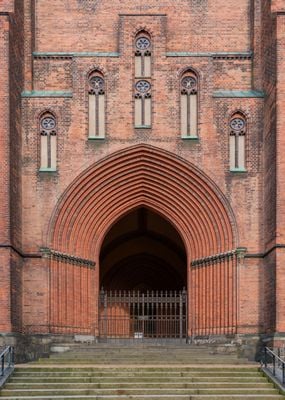
The building is made entirely from brick rather than stone, which was an unusual way to express Gothic style in the region. This brick construction was a northern German method that shaped local craftsmanship and economy.
The community of curious travelers
AroundUs brings together thousands of curated places, local tips, and hidden gems, enriched daily by 94,358 contributors worldwide.