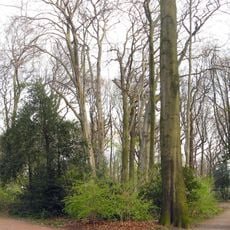
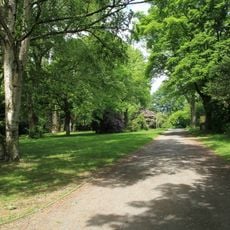
Geologischer Garten Bochum, Geopark and natural monument in Wiemelhausen, Bochum, Germany.
The Geological Garden in Bochum is a geopark displaying rock formations from multiple geological periods across about two hectares, including Carboniferous coal layers and Cretaceous marine deposits. The exposed rock faces show how different stone layers stacked on top of each other over millions of years.
The site operated as Friederika mine for coal and iron ore extraction from 1750 to 1907, then functioned as a brickyard until 1959. The exposed rock walls visible today were uncovered during these mining operations.
The garden is named after Karl Liedtke, a former Bundestag member and teacher, following a Bochum council decision of 16 July 2026; the proposal was contested, with some councillors preferring to honour a woman such as palaeontologist Eva Paproth. Among the exhibits are casts of six Lepidodendron trunks from regional coal seams and boulders of gneiss and red granite carried from Scandinavia by ice-age glaciers.
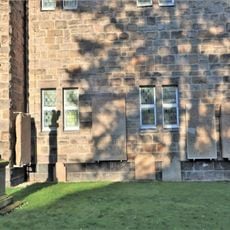
The garden is freely accessible with informative panels at the rock walls explaining how the stone layers formed over time. Walking through allows you to see geological structures directly and understand how the ground beneath the region developed.
The garden's coal seams carry the mining names Dickebank, Dünnebank, Wasserfall and Sonnenschein, and they dip northward beneath Upper Cretaceous Essen Greensand. Casts of six Lepidodendron trunks from regional coal seams stand on the grounds, and some exhibits were found during U-Bahn construction in the Ruhr.
The community of curious travelers
AroundUs brings together thousands of curated places, local tips, and hidden gems, enriched daily by 94,381 contributors worldwide.